
Selling your home
How to Use Viewing Feedback to Improve a House Sale
One viewer dislikes the kitchen. Another loves the rooms but worries about parking. A third says the price is too high. Those comments do not all carry the same weight. The purpose of viewing feedback is to discover patterns that might improve your sale strategy, not to react to every individual opinion.
This is an estimate from comparable sales, not a RICS or mortgage valuation, and not a survey.
A comment is not yet a conclusion
A viewer says the kitchen feels small. Another says the garden is too much work. Someone else says they are still considering other properties. None of those remarks alone establishes that your asking price is wrong or that you need to renovate.
Feedback is useful when it tells you how relevant buyers respond to the property. The task is to distinguish a personal preference from a recurring obstacle to purchase.
Ask the same useful questions each time
Ask your agent to record whether the viewer was financially and practically able to buy, what attracted them, what gave them pause and whether they intend to take another step. A vague 'not for them' does not explain much.
The agent may not be able to obtain detailed feedback from everyone. Buyers sometimes avoid being direct or have reasons they do not wish to share. Treat the comments as imperfect evidence, not a scientific survey.
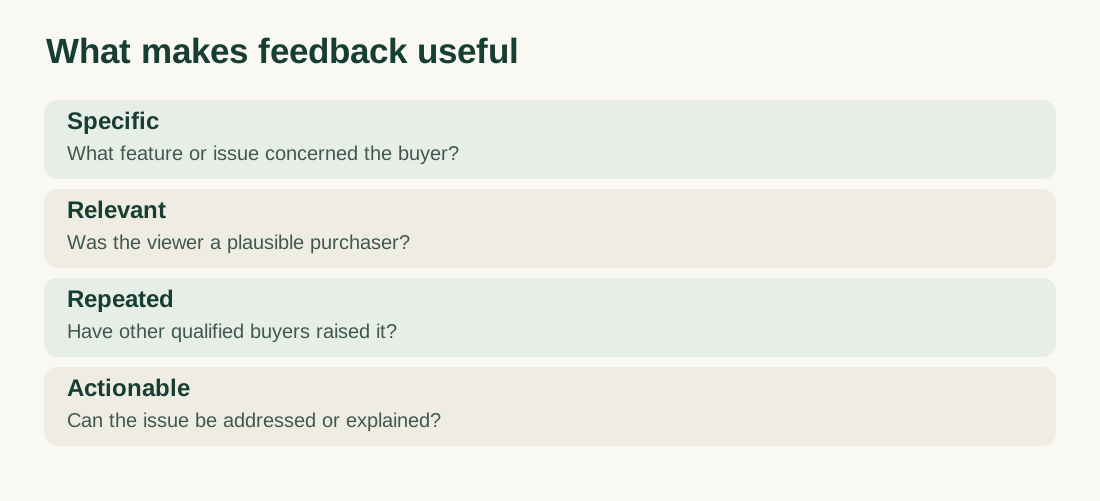
Specific: What feature or issue concerned the buyer?. Relevant: Was the viewer a plausible purchaser?. Repeated: Have other qualified buyers raised it?. Actionable: Can the issue be addressed or explained?.
Separate taste, facts and objections
Taste is personal. One buyer wants a modern kitchen and another values original fittings. A factual concern is different: uncertainty about parking rights, the condition of a roof or the size of a room may need an answer or professional assessment.
A repeated price objection deserves investigation, but the phrase 'too expensive' may mean several things. Does the buyer think comparable homes offer more space? Are they concerned about repair costs? Is the property simply beyond their budget?
Ask the agent for the reason behind the reaction where possible. Then compare it with completed sales and the homes competing for the same buyer. Asking price versus market value helps keep these concepts separate.
Look for a pattern across plausible buyers
Three unrelated viewers raising the same practical issue may be more informative than one strongly expressed opinion. But even repeated feedback can be skewed if the property has been shown to people seeking something quite different.
Illustrative example. Four viewers mention that the third bedroom feels smaller than expected. Before changing the asking price, check whether the floor plan and photography fairly show the room. If they do, consider whether the property's target audience and price positioning are appropriate. The feedback points to a question, not a predetermined solution.
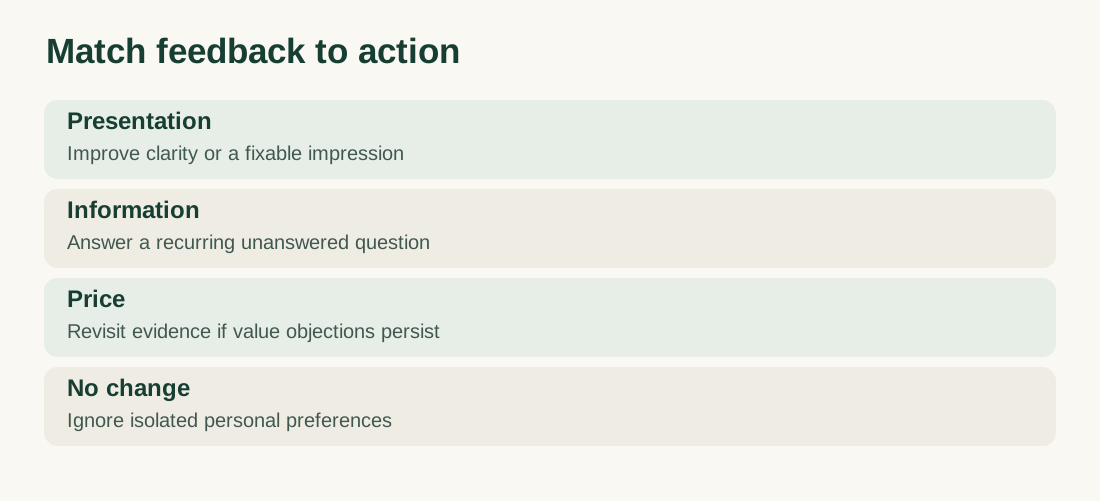
Presentation: Improve clarity or a fixable impression. Information: Answer a recurring unanswered question. Price: Revisit evidence if value objections persist. No change: Ignore isolated personal preferences.
Choose changes that match the evidence
If buyers cannot understand the layout, better photographs or a clearer floor plan may help. If several ask about an unresolved legal or property fact, provide accurate information. If they consistently compare the home unfavourably with cheaper alternatives, review the pricing evidence.
Do not spend heavily on renovations because one viewer disliked the decor. Whether to renovate before selling explains how to weigh cost and likely buyer response. If viewings are plentiful but offers absent, the viewings-without-offers guide explores the wider diagnosis.
Give the change a fair test
Agree what will change, when it will happen and what response would count as meaningful. If you change the photographs, description and price together, you may not learn which element affected enquiries.
Keep a simple log: date, viewer position, positive reactions, objections, follow-up and outcome. Do not record unnecessary personal details about viewers. Ask the agent for a regular summary of patterns rather than a stream of isolated remarks.
PMD's Property Intelligence Report can help examine comparable sales and pricing assumptions. It does not provide a review of an agent's feedback process or marketing strategy. PMD is a trading name and service of The Ivybridge Collection Ltd, whose registered nature of business is real estate agencies, and we also sell marketing subscriptions to estate agents.
The most useful question at the next seller update is not 'Did they like it?' Ask which repeated concern has emerged, what evidence supports it and what action is justified.
Sources
- HM Land Registry, About the Price Paid Data: Explains the scope of completed property transaction records