
Formal property valuations
How do valuations work when buying or selling shared ownership shares?
Buying more shares and selling a shared ownership home are different transactions. Establish which process applies and what your landlord or provider requires before commissioning a valuation. A general online estimate does not automatically meet those instructions.
This is an estimate from comparable sales, not a RICS or mortgage valuation, and not a survey.
Identify the transaction first
This guide addresses the England shared ownership guidance published by government. Establish the relevant scheme and jurisdiction for your home; arrangements elsewhere can differ.
Government guidance on staircasing identifies professional valuation and provider steps. Its resale guidance addresses a separate process. Start with the correct route rather than borrowing a requirement from an unrelated transaction.
Ask the provider for the relevant information and identify the lease and scheme terms that need advice. A percentage share on a marketing page is not a complete description of your rights or the transaction.
Staircasing and selling need separate briefings
For purchases of shares of five per cent or more, the government guidance requires a valuation by a surveyor registered with the Royal Institution of Chartered Surveyors. Eligible one-per-cent purchases can use a different index-based route. Ask the landlord which route your lease permits instead of assuming every staircasing purchase needs identical work.
When buying more shares, ask how the valuation is commissioned and what the provider will use it to determine. When selling, ask about the current resale instruction and who needs the assessment.
Do not assume the same paperwork or timetable answers both. Our suggested briefing note records the transaction, intended recipient and current instruction on separate lines.
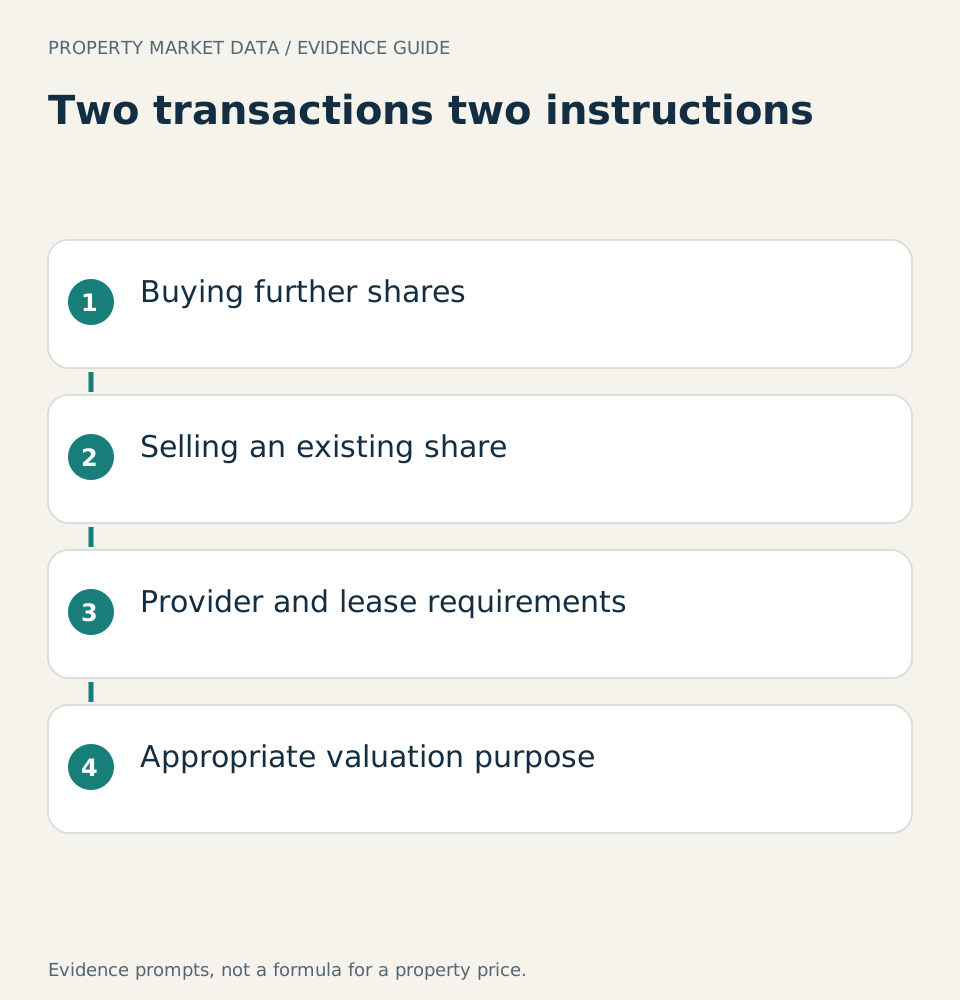
Buying further shares; Selling an existing share; Provider and lease requirements; Appropriate valuation purpose. Read the evidence together before making a property-specific judgement.
Valuation types and purposes helps explain the distinction between general research and a specified assessment. Confirm the actual report requirements with the provider before paying for a service.
Keep improvement questions factual
For the valuation-based staircasing route, the guidance distinguishes current market value from unimproved value. Where improvements affect value, the assessment must identify both; written landlord permission affects which figure is used for additional shares. Keep that permission and the work records available. This is not a rule that renovation spending is deducted pound for pound.
If work has been carried out, ask how it should be described and what evidence the relevant process needs. Do not assume an owner's expenditure establishes the valuation effect or the treatment of improvements under the scheme.
Provide documents where requested and keep uncertainties visible. Your adviser and the appropriate professional should establish which facts matter to this transaction.
A lease-extension valuation is another task
What a lease-extension valuation assesses concerns a different purpose. It should not be treated as interchangeable with the whole-home value used in a shared ownership process.
A short lease or proposed change may create additional questions. Ask the provider and your legal adviser how they affect the transaction rather than combining several generic estimates yourself.
Ask the provider about your transaction
| Check | What to establish |
|---|---|
| Purpose | State whether you are buying more shares or selling. |
| Instructions | Get the provider requirements for the particular lease and scheme. |
| Assessment | Check who can carry out the work and what must be supplied. |
| Sequence | Understand which steps follow acceptance of the report. |
A neighbour transaction may have taken place under different terms. Use it as a prompt for questions, not as your instruction. Distinguish the whole-home assessment from the cost or proceeds relating to your share. Fees, lease terms and the transaction process need their own confirmation; an ordinary home estimate does not establish those details.
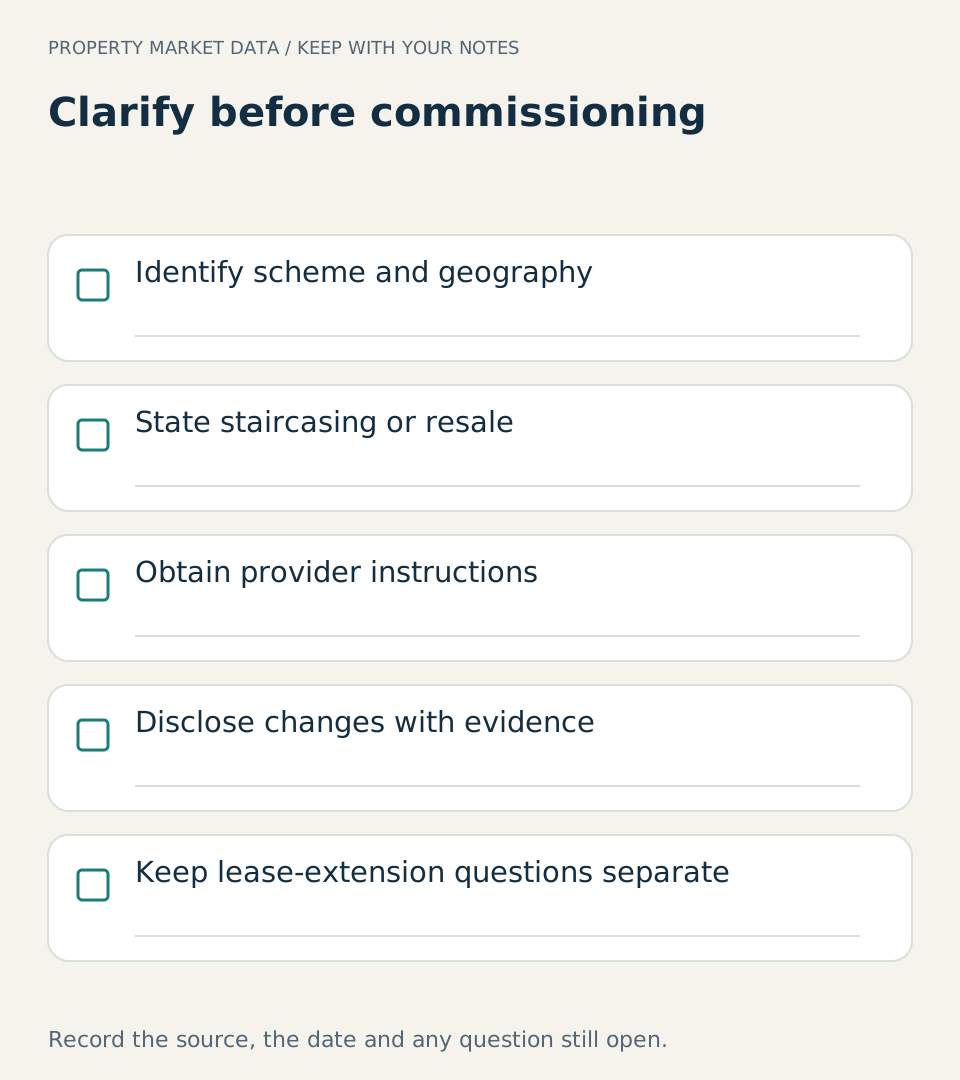
Identify scheme and geography; State staircasing or resale; Obtain provider instructions; Disclose changes with evidence; Keep lease-extension questions separate. Record the supporting document and any unanswered question.
Read the property evidence as well as the scheme instruction
For the broader asking-price question, assessing a leasehold flat's price helps organise market and property information. The two tasks should support one another without being confused.
Ask the valuer which evidence supports the assessment and how property-specific assumptions are handled. A scheme-compliant process still involves evidence about the actual home.
If an aspect of the document is unclear, use the provider's appropriate question or correction route. Do not assume you can substitute another estimate merely because it gives a preferred figure.
Plan with the right organisation
Check the transaction steps, costs and timing directly with the provider and your advisers. The relevant scheme and documents should guide the decision. This article does not determine your entitlement to buy particular shares or interpret your individual lease.
Keep a record of the instruction and the material supplied. That helps you understand which assessment was prepared for which purpose if several reports exist.
Where PMD can contribute separately
PMD does not supply the required shared ownership staircasing or scheme resale valuation. An automated estimate is not a substitute for the appropriate instructed professional work.
For a separate market research question about an eligible home, a PMD report may help organise comparable sales and local context. Check the scope before using it for that limited decision.
The important distinction is between understanding market evidence and completing a specified provider process. Choose the work that fits the actual task.
Sources
- Government guidance, Shared ownership staircasing: Relevant England shared ownership valuation and provider process
- Government guidance, Selling a shared ownership home: England shared ownership resale instructions and provider involvement
- Leasehold Advisory Service, Why a professional valuation matters: Specialist lease-extension valuation expertise