
Formal property valuations
What does a lease extension valuation assess?
A lease-extension valuation addresses the proposed lease transaction, not simply the flat's sale price. Establish the legal route and current requirements with appropriate advisers before using a calculator or commissioning work. A general home estimate does not determine the extension premium.
This is an estimate from comparable sales, not a RICS or mortgage valuation, and not a survey.
Separate the two valuation questions
You may want to know what the flat could sell for and what extending its lease would involve. Those are related but different questions. Keep them separate when asking providers for quotes or explanations.
The Leasehold Advisory Service recommends appropriately qualified expertise specialising in lease-extension work. Its guidance helps identify why the professional instruction matters. The relevant process needs more than a number taken from an online property estimate.
For the market-price question, assessing a leasehold flat's asking price covers a different task. Do not assume that a figure from that research answers the extension question.
Read the actual lease and proposed route
Ask a legal adviser to identify the applicable position and the information needed. Lease terms, parties and the route being considered matter. A phrase such as “short lease” is not a complete instruction.
Current reform guidance should be checked before relying on a familiar calculation or threshold. The Leasehold Advisory Service publishes information about reforms. A proposed change should not be described as already effective without checking commencement and application.
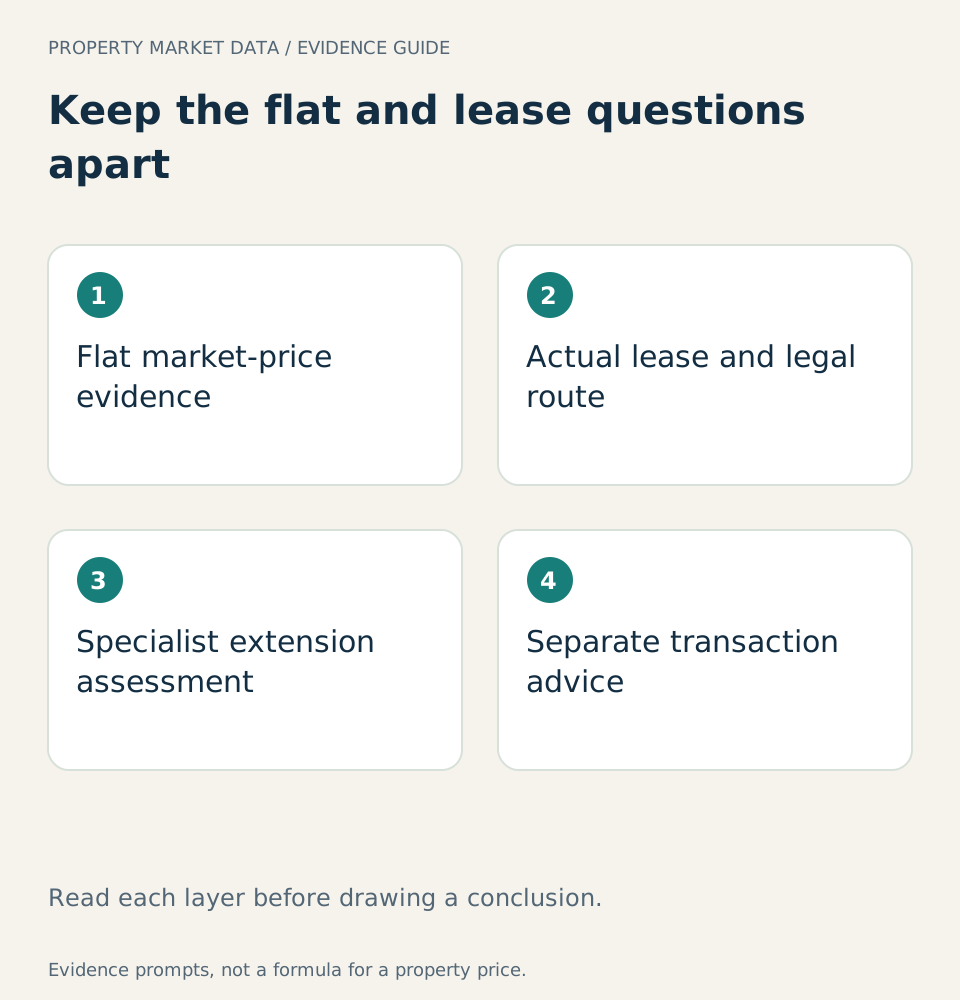
Flat market-price evidence; Actual lease and legal route; Specialist extension assessment; Separate transaction advice. Read the evidence together before making a property-specific judgement.
Brief the specialist clearly
Provide the property and lease information requested, the transaction purpose and the route advised. Ask what the assessment will explain, how assumptions are handled and what further negotiation or questions are included.
Do not choose a provider solely because an online calculator gives a reassuring estimate. An indicative calculation and a professional instruction are not interchangeable deliverables.
Shared ownership may raise additional questions
Valuations for shared ownership shares and resale explains those different transaction purposes. Confirm the lease and provider requirements rather than assume a general lease-extension article covers the particular arrangement.
If several assessments are being commissioned, label each by its purpose. A provider should be able to explain which work it is undertaking and which questions belong to another adviser.
Make the lease instruction precise
| Check | What to establish |
|---|---|
| Lease | Provide the actual lease and relevant dates. |
| Objective | Describe the extension route being considered with your advisers. |
| Terms | Identify existing provisions rather than relying on a listing summary. |
| Current position | Ask advisers about applicable reforms and the next procedural step. |
A sale estimate of the flat and a specialist assessment for extending its lease answer different questions. Keep them in separate files and explain their purposes when discussing either. Avoid using a generic online calculation as a substitute for case-specific advice. The legal route, relevant terms and professional instruction determine what the specialist needs to assess.
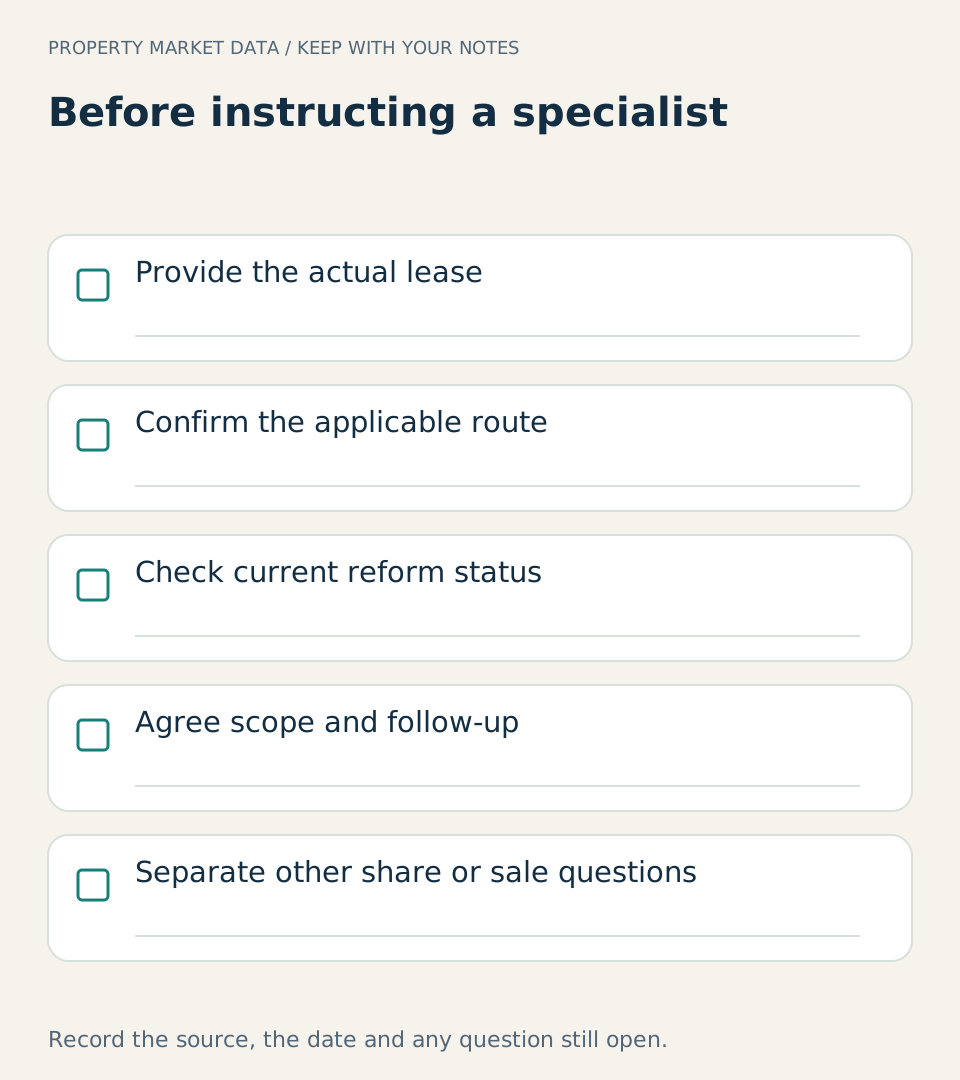
Provide the actual lease; Confirm the applicable route; Check current reform status; Agree scope and follow-up; Separate other share or sale questions. Record the supporting document and any unanswered question.
Prepare for an evidence-based explanation
Ask the specialist what the proposed assessment relies on and how uncertainty is presented. Request a clear explanation of the relevant basis rather than focus entirely on a single premium number.
Keep the instruction, documents and professional responses together. If new information arrives, ask how it affects the assessment. Do not silently substitute an updated property estimate and assume the extension result changes proportionately.
Choosing a property valuation type provides an overview of why different purposes need different work. Use it to recognise the distinction, not as a replacement for advice on your lease.
Keep the decision within the proper process
The appropriate legal and valuation advisers should help you understand the actual transaction. This guide does not determine eligibility, interpret an individual lease or calculate the price payable.
An agreement with a landlord or another party needs its own appropriate review. A valuation explanation can inform the discussion without certifying that the legal terms are suitable.
PMD and the separate market enquiry
PMD does not provide a lease-extension premium valuation or legal advice on the extension. Its report should not be bought for that requirement.
If you separately need current sale-market research for an eligible flat, PMD can organise comparable sales and local context. Read the report scope and keep the market enquiry distinct.
Clear instructions prevent a general house-value figure being asked to perform a specialist lease-transaction task.
Sources
- Leasehold Advisory Service, Why a professional valuation matters: Specialist lease-extension valuation expertise
- Leasehold Advisory Service, Lease extension reforms: Need to check current reform and commencement status
- Royal Institution of Chartered Surveyors, Red Book: Professional valuation standards and scoped instructions