
Buying and offers
Is a New-Build House Worth the Asking Price?
A new-build asking price may come with attractive incentives, a polished show home and a completion timetable that suits the developer. Those features can matter, but they make comparison with older homes less straightforward. The aim is to understand the whole transaction rather than judge the headline price in isolation.
This is an estimate from comparable sales, not a RICS or mortgage valuation, and not a survey.
The show home is not the comparison property
A new-build home can be appealing because nobody has lived in it, the finishes look fresh and the developer may offer incentives. But the show home may contain upgrades, furniture or landscaping that are not included in the price of the plot you are considering.
Start by identifying exactly what you would receive. Ask for the plot specification, floor plan, dimensions, tenure, parking arrangements and any optional extras. Check whether the property is complete, still under construction or being sold off plan.
A comparison based on the show home's appearance can be misleading if the actual home differs in orientation, plot size or finish.
Compare the whole package, not the sticker price
Developers sometimes offer deposit contributions, upgrades, legal-fee contributions or other incentives. These may reduce your upfront cost or improve what you receive, but they are not necessarily the same as a reduction in the property's market value.
Ask for every incentive in writing, including conditions and expiry dates. Tell your mortgage adviser and lender about the full arrangement, as incentives can affect how a lender assesses the transaction.
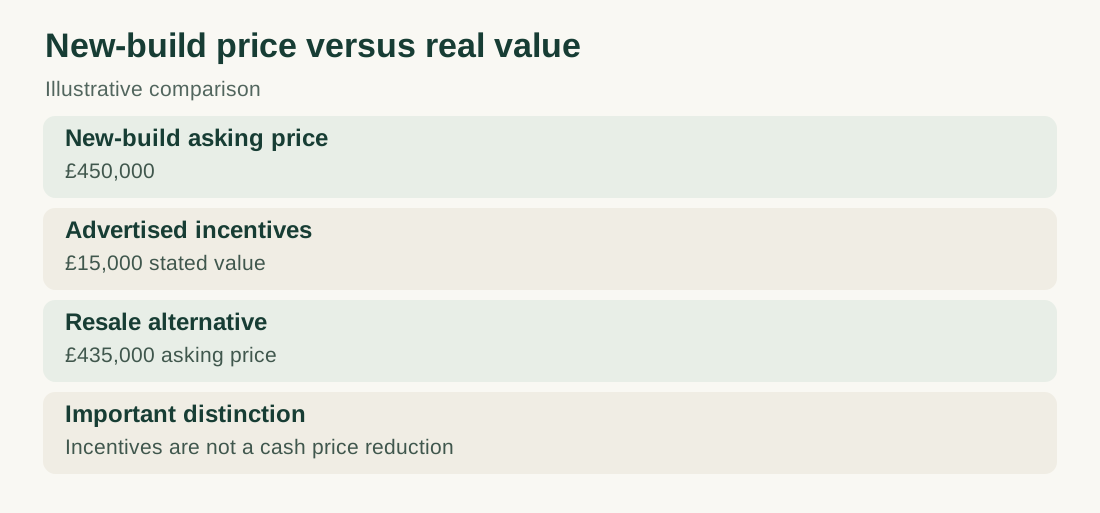
Illustrative example. One new home is advertised at £450,000 with an incentive package the developer describes as worth £15,000. A similar resale home is offered at £435,000. You cannot assume the new home is effectively worth £435,000 or that the incentives are worth £15,000 to you. Some may cover things you would not otherwise buy.
 Illustrative example
New-build asking price: £450,000. Advertised incentives: £15,000 stated value. Resale alternative: £435,000 asking price. Important distinction: Incentives are not a cash price reduction.
Find the most useful comparables
Start with completed sales of similar new homes on the same development if available. Then examine nearby resale homes of similar size, layout and location.
New builds and established homes can differ in plot size, room proportions, energy performance, garden maturity and the condition of the surrounding streets. These differences matter to buyers but do not come with universal adjustment percentages.
Where a development is still being sold, the developer's current asking prices may be important competition for a future resale. A buyer considering your home later might be able to purchase a brand-new alternative nearby.
For a structured comparison, use the guide to comparing several homes.
Ask about ongoing estate costs
Some developments have communal areas, private roads, open spaces or shared facilities with ongoing management charges. Establish what is maintained, who controls the management arrangement, how charges are calculated and what may happen if costs rise.
Also check the tenure and any lease terms, where applicable. A 'freehold' description does not automatically mean there are no ongoing estate charges or covenants.
Ask your conveyancer to explain the title, obligations and arrangements for adopting roads or sewers. Do not rely on sales-office shorthand for legal commitments.
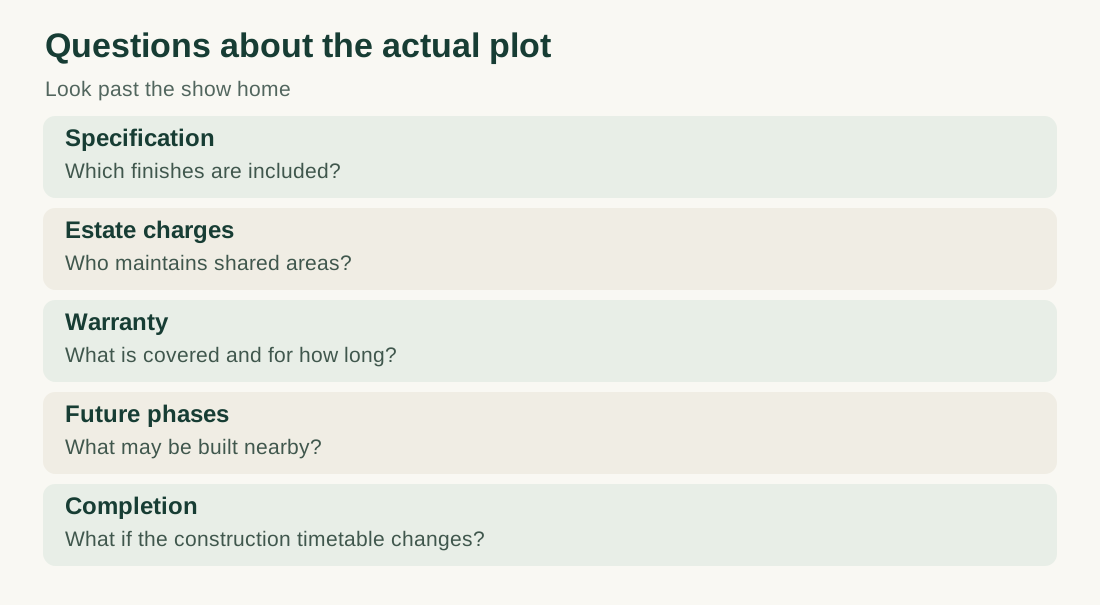
Specification: Which finishes are included?. Estate charges: Who maintains shared areas?. Warranty: What is covered and for how long?. Future phases: What may be built nearby?. Completion: What if the construction timetable changes?.
Look at the build and the timetable
Ask which new-home warranty or insurance arrangements apply, what they cover and how defects will be reported and resolved. A warranty is not the same as a guarantee that every issue will be fixed immediately.
If you are buying before completion, discuss the contract, long-stop provisions, expected completion process and potential delays with your conveyancer. Check what happens to your mortgage offer if the build timetable changes.
An independent snagging inspection may help identify finishing defects, but it does not replace legal enquiries or other specialist checks. Find out when access will be allowed and what process the developer uses to respond.
Think about living there after the launch
Visit the actual plot and surrounding streets where access is permitted. Consider sun direction, overlooking, parking, nearby construction phases and how completed landscaping may differ from promotional drawings.
Ask about future development phases and check planning information rather than assuming today's open view will remain. If schools or transport improvements are advertised as forthcoming, verify their status separately.
The questions in the house viewing checklist are useful even when the property is brand new.
You can read about PMD's buyer report for a home you are considering. Neither an automated estimate nor a sales incentive replaces lender advice, a survey or conveyancing.
Ask for a written comparison of the actual plot, its incentives, specification, running costs and nearby resale alternatives. The right new-build decision is about the home you will own, not the presentation you were shown.
Sources
- HM Land Registry, About the Price Paid Data: Explains completed sale price records and their coverage
- GOV.UK, Buying a home: Home purchase process, with new-build specifics to verify