
Buying and offers
Questions to ask when viewing a house
A viewing is short, and it is easy to spend it admiring the kitchen while missing things that affect everyday life. The most useful questions are the ones you can answer by being there, with a few important follow-ups for the agent.
This is an estimate from comparable sales, not a RICS or mortgage valuation, and not a survey.
Use the viewing to discover what photographs cannot show
Photographs can make a room look bright, but they cannot tell you whether a staircase feels awkward, traffic noise carries into the garden or the second bedroom fits the furniture you own. A viewing is your opportunity to test how the property works in person.
Before you arrive, decide which two or three features matter most to your daily life. If you work from home, check the proposed workspace. If you need level access, inspect the route from the street through the entrance and into the main rooms. If you have children, consider the movement between living areas and outdoor space.
Walk through the rooms in the order you would use them
Start at the front door. Where will coats, shoes and deliveries go? Is there room to move comfortably through the hallway? In the kitchen, imagine preparing a normal meal rather than simply looking at the finishes. Check the position of sockets, storage and space for appliances you expect to use.
Look at bedrooms with actual bed sizes in mind. A room photographed with a small bed may not accommodate the arrangement you need. In bathrooms, check ventilation, storage and access. You can ask whether fixtures and fittings will be included, but make sure the eventual contract records the agreed position.
Ask whether any rooms have been repurposed or altered. If an extension or loft conversion is important to your decision, note the question for later documentary checks rather than assuming the work has the necessary permissions.
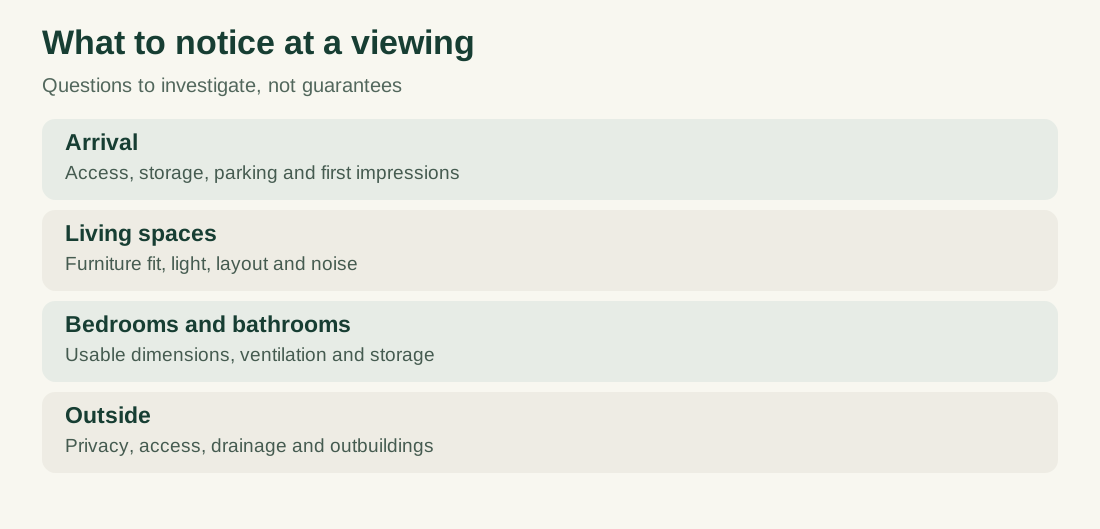
Arrival: Access, storage, parking and first impressions. Living spaces: Furniture fit, light, layout and noise. Bedrooms and bathrooms: Usable dimensions, ventilation and storage. Outside: Privacy, access, drainage and outbuildings.
Look for clues without trying to diagnose defects
You can notice cracks, stains, signs of damp, poor ventilation or an uneven surface. You cannot reliably establish their cause from a brief viewing. Photograph or write down what concerns you, with permission where appropriate, and ask whether the agent has information from the seller.
A freshly decorated wall is not evidence of a concealed problem. Nor does a dry wall on a sunny day rule one out. If you proceed, commission a suitable survey and ask a qualified specialist about any specific concern the surveyor identifies.
Outside, look at rooflines from safe public or accessible positions, drainage points, boundaries, paths, access and the apparent condition of outbuildings. Do not climb into lofts, operate unfamiliar equipment or enter unsafe areas during a viewing.
Ask about costs and what is included
Find out the council tax band, the available Energy Performance Certificate rating, the type of heating and whether the seller can share indicative running costs. Actual bills vary with occupancy, tariffs and behaviour, so treat them as context rather than a forecast of your own spending.
If the property is leasehold or part of a managed development, ask about service charges and communal responsibilities. These figures and obligations need documentary confirmation later. Ask what fixtures, appliances, garden structures and other items are expected to remain.
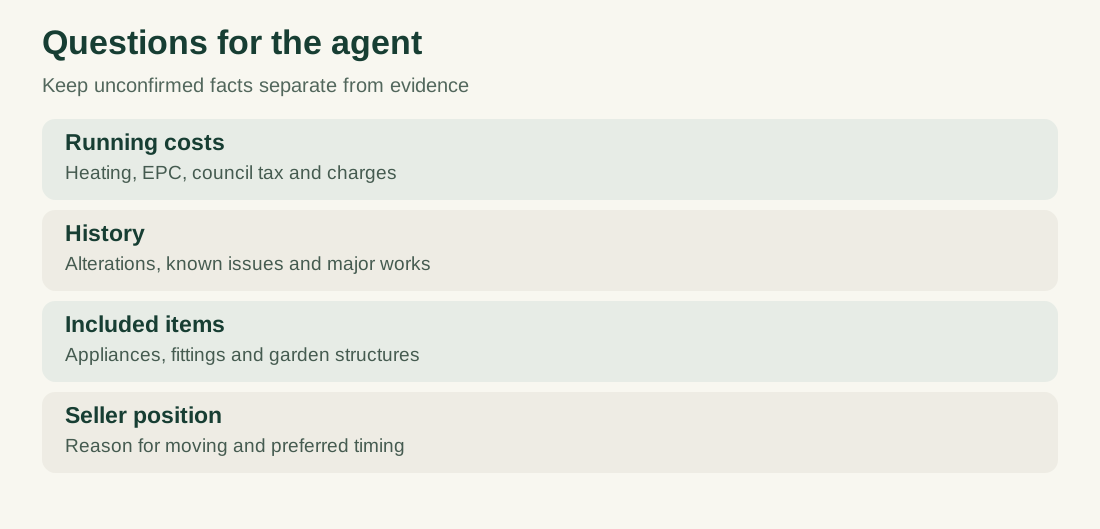
Running costs: Heating, EPC, council tax and charges. History: Alterations, known issues and major works. Included items: Appliances, fittings and garden structures. Seller position: Reason for moving and preferred timing.
Step outside and listen
Spend time in the garden or by the open window, if permitted. Consider road noise, overlooking, privacy, light and the relationship with neighbouring properties. If parking matters, establish where you would park in practice rather than relying on a photograph of an empty street.
A weekday morning and a weekend afternoon can feel different. If the home remains a serious contender, a second viewing at a different time may be useful. Do not trespass or disturb neighbours while checking the surroundings.
For a broader comparison between locations, see buying in an unfamiliar area.
Ask questions that reveal the seller's experience
How long has the seller lived here? Why are they moving? Have they experienced any recurring problems they can disclose? Have any significant works been undertaken? What is the seller's preferred timescale?
Answers may be helpful, but they should not be treated as independently verified. Estate agents have duties concerning material information, and your conveyancer will still need to investigate legal matters. Keep a record of what was said and follow up in writing if it matters to your decision.
Finish with a second-viewing shortlist
Immediately afterwards, note three things you liked, three concerns and the unanswered questions. The detail fades quickly once you have seen several properties. If you are considering an offer, move on to the pre-offer checks. That guide covers funding, comparable sales and legal or professional checks that a viewing cannot resolve.
You can read about PMD's buyer report for a home you are considering. A viewing checklist is no substitute for survey or conveyancing work.
A good viewing does not need to settle every question. It should tell you whether the property deserves the next stage of investigation, and exactly what that investigation must address.
Sources
- HM Land Registry, About the Price Paid Data: Explains recorded completed sale price information and limitations
- RICS, Home surveys: Explains the purpose and scope of residential property surveys, URL to verify before publishing