
Formal property valuations
How does a mortgage or remortgage valuation differ from your own estimate?
A lender's valuation supports its lending decision. Your own research may support a purchase, sale or remortgage discussion, but it does not control that decision. Establish what the lender requires rather than assume a higher online estimate changes the outcome.
This is an estimate from comparable sales, not a RICS or mortgage valuation, and not a survey.
Start with the lender's question
MoneyHelper explains mortgage valuation as part of the lending process. The assessment considers the property for the lender's decision, not every question you might have about condition or market strategy.
A borrower can therefore receive a valuation process without obtaining the same information as a separately instructed survey or market report. Ask what the assessment covers and what information will be available to you.
The different types of property valuation explains the broader purpose distinction. Do not assume a mortgage valuation is a full building inspection merely because the lender has considered the property.
The method may differ from what you expect
MoneyHelper's remortgage guidance notes that a lender's valuation may involve limited observation rather than the visit a homeowner imagines. The actual method and requirements should be established with the lender or adviser.
Ask what property information is needed and provide material facts accurately. An applicant should not infer from a quick process that all construction, title or condition questions have been resolved.
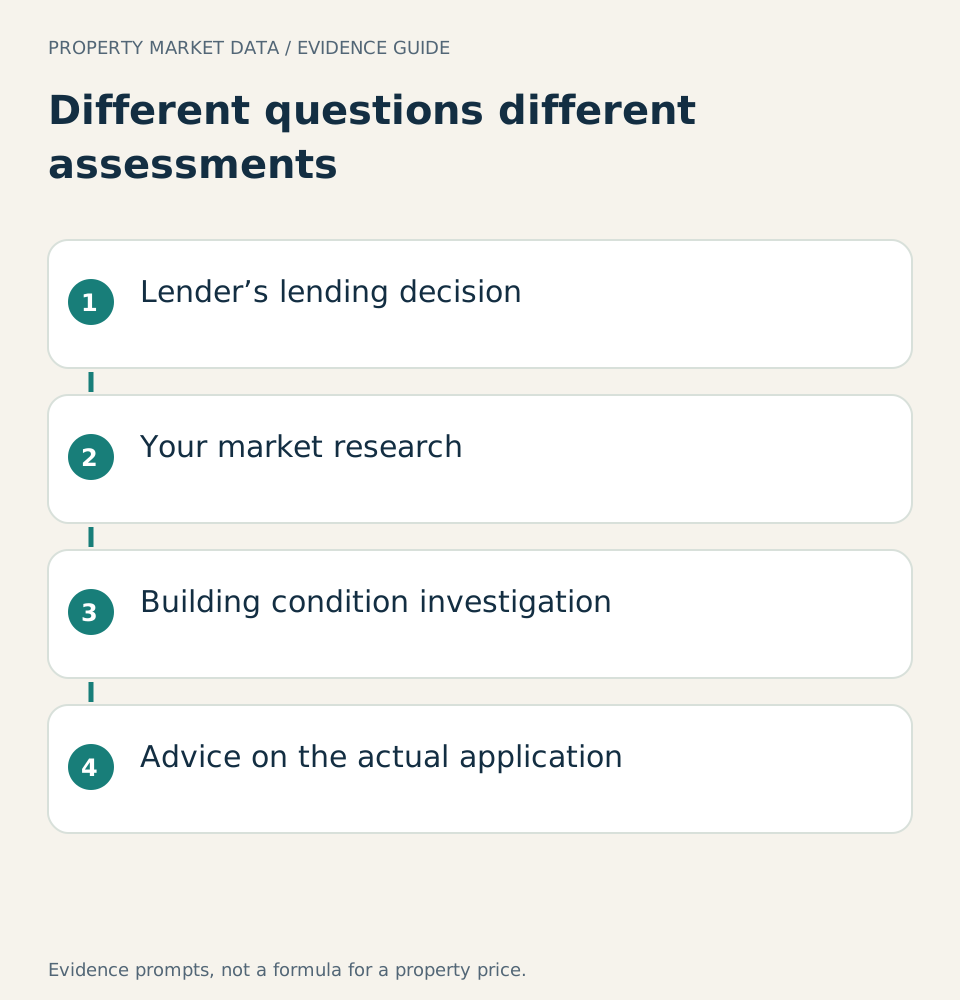
Lender’s lending decision; Your market research; Building condition investigation; Advice on the actual application. Read the evidence together before making a property-specific judgement.
State changes rather than assuming an uplift
If the home has been altered, ask how the lender needs that information supplied. Keep supporting documents ready. Expenditure on work does not by itself establish the value the lender will use.
If a property has unusual features, say so. A generic online comparison cannot determine whether a particular lending product or application is suitable.
What if the result differs from your estimate?
Ask the lender or adviser about the appropriate explanation and next steps. Do not obtain several unrelated estimates and assume their average overturns the assessment.
What a mortgage down valuation means covers the separate situation where the assessment is below a purchase price. Keep the price, borrowing decision and required professional evidence distinct.
The relevant next step may depend on the actual application and lender. This article does not recommend a mortgage product or establish what you can borrow.
Prepare questions for the lender
| Check | What to establish |
|---|---|
| Purpose | Ask what the lender assessment is intended to establish. |
| Property issues | Disclose relevant construction, tenure or building information. |
| Report access | Find out what information will be supplied to you. |
| Condition needs | Consider whether you need a separate survey for your own decision. |
A lender decision may involve criteria beyond your view of the home price. If the assessment differs from an agreed price or expected figure, ask about the stated reason and available process rather than assuming it is a factual error. A consumer market report can support your own research, but cannot require the lender to adopt its result.
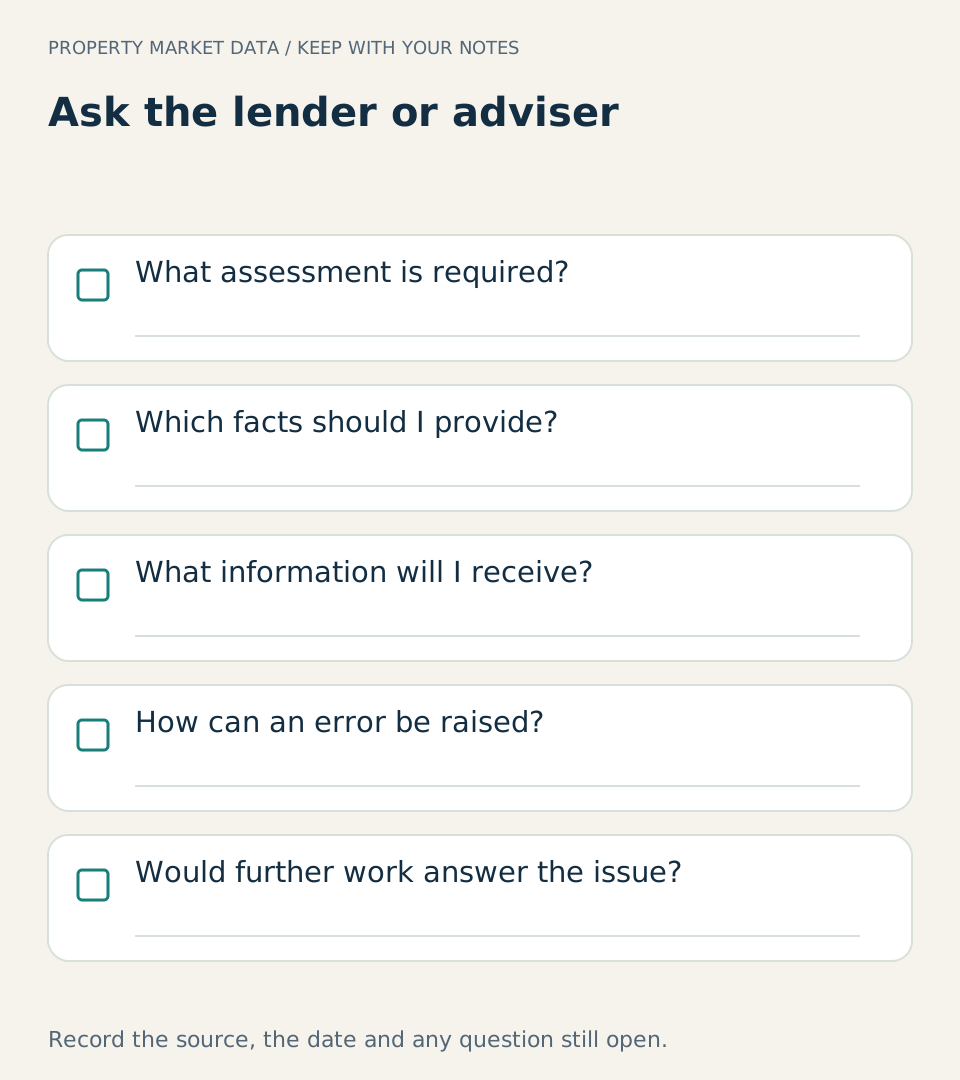
What assessment is required?; Which facts should I provide?; What information will I receive?; How can an error be raised?; Would further work answer the issue? Record the supporting document and any unanswered question.
An older assessment may have another purpose
When to check an earlier property valuation explains general reuse questions. For a mortgage or remortgage, the lender's current requirements govern the relevant process.
An estate agent's appraisal, a previous lender assessment and a present automated estimate may each be useful background. They should not be treated as documents with identical instructions or acceptance.
Before commissioning additional work, ask what problem it would address and whether the lender would use it. Paying for an unrelated report is not a way to create eligibility.
Prepare a focused conversation
Record the property facts, what the lender has requested and the questions you want the adviser to explain. Keep affordability, valuation method and condition investigation separate rather than treating them as one answer.
If a factual detail appears wrong, follow the appropriate correction process. A correction request should identify the fact and evidence, not simply state the result you want.
PMD does not supply the lender's valuation
PMD can organise comparable sales and local context for an eligible sale or purchase enquiry. Its estimate is not the lender's assessment and does not establish borrowing terms.
If you have a separate current sale decision, read the PMD report scope before considering the additional research.
Use each source for the decision it can actually support. The lender's process should be clarified with the lender; personal market research should remain clearly identified as such.
Sources
- MoneyHelper, Remortgaging: Lender assessment and remortgage process, not personalised lending advice
- MoneyHelper, Mortgage fees and moving costs: Lender valuation purpose and separate moving-cost categories
- Royal Institution of Chartered Surveyors, Automated valuation models roadmap: Model scope, explainability and evidence limitations