
Property valuations
Can you value your home without an estate agent visit?
You may want an idea of your home's value before inviting agents round. Remote research can help you prepare, but avoiding an appointment does not remove the need to understand the actual property. The useful question is what can be established without a visit.
This is an estimate from comparable sales, not a RICS or mortgage valuation, and not a survey.
You can start before arranging an appointment
An online estimate can give you a starting point for researching a home. It uses recorded information and market evidence rather than a walk through the rooms. That distinction matters when you decide how much weight to place on the result.
Rightmove's explanation of online valuations identifies property data and comparable evidence as inputs, while recognising that current condition and unusual characteristics may need more attention. Treat remote research as preparation for a decision, not proof that every relevant feature has been assessed.
You do not need to organise a valuation appointment merely to write down your questions. Start with the address, property type, current layout and any material changes you want an assessment to consider. Keep documents and your own observations separate.
Build a useful information pack
Our suggested pack is modest: a floor plan if you have one, a list of changes since earlier records, current photographs and the particular decision you are considering. Date the material. A photograph of a kitchen taken years ago is not evidence of its present condition.
Describe changes factually. “The former garage is now used as a room” raises different questions from “the property has more living space”. You may need to establish permission, measurement and lawful use before drawing a pricing conclusion.
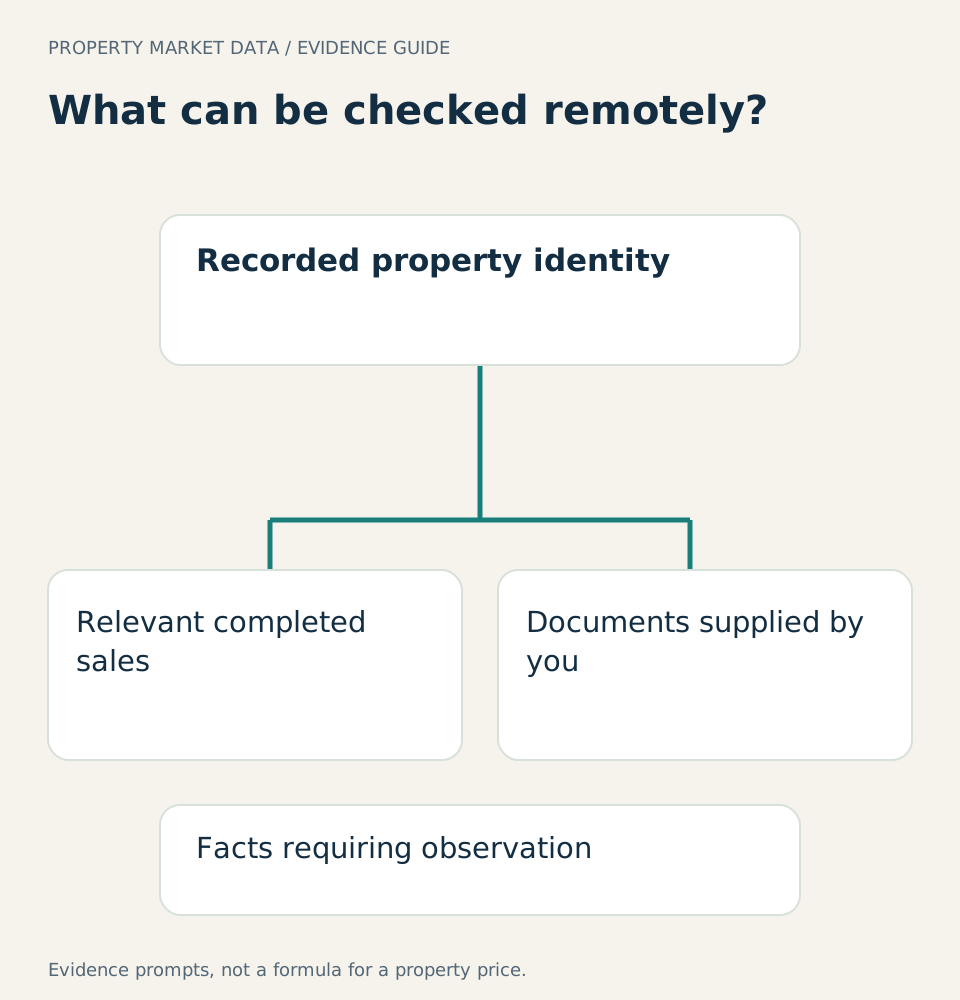
Recorded property identity; Relevant completed sales; Documents supplied by you; Facts requiring observation. Read the evidence together before making a property-specific judgement.
If a record appears wrong, follow the steps for correcting property details. Ask a provider which information it has used and whether new details affect its assessment. Sending a photograph does not establish that a model has incorporated it.
Remote does not mean identical
An automated result and a person analysing documents remotely are different processes. A professional desktop assessment may also have a specifically defined purpose and scope. Ask how the result was prepared rather than inferring this from the word “online”.
Some facts remain difficult to establish remotely. Pictures may not reveal moisture, access problems, structural concerns or the experience of moving through the home. Keep those unknowns visible in your notes.
Separate a visit from unwanted contact
Not wanting an agent visit does not necessarily mean you object to all contact. You might want a report delivered by email but no marketing calls. Those preferences should be checked against the provider's actual process.
Read the questions to ask about valuation privacy and sales calls if contact is your main concern. Do not assume that every remote tool passes your details to an agent, or that every paid report avoids doing so. Look for the explanation and the choices offered.
Decide which questions need a visit
| Check | What to establish |
|---|---|
| Visible layout | A dated plan can describe arrangement but may not confirm present use. |
| Condition | Photographs show selected views; concealed defects require appropriate investigation. |
| Neighbouring setting | Street evidence helps, but noise and access may need observation. |
| Unrecorded change | Supply documents rather than expecting an automated result to detect alterations. |
Write the remaining unknowns as questions rather than quietly filling them with assumptions. If a visit is needed, send that list ahead so the appointment has a purpose. Remote preparation can still be worthwhile: it helps distinguish a question about comparable sales from a question about the building itself.
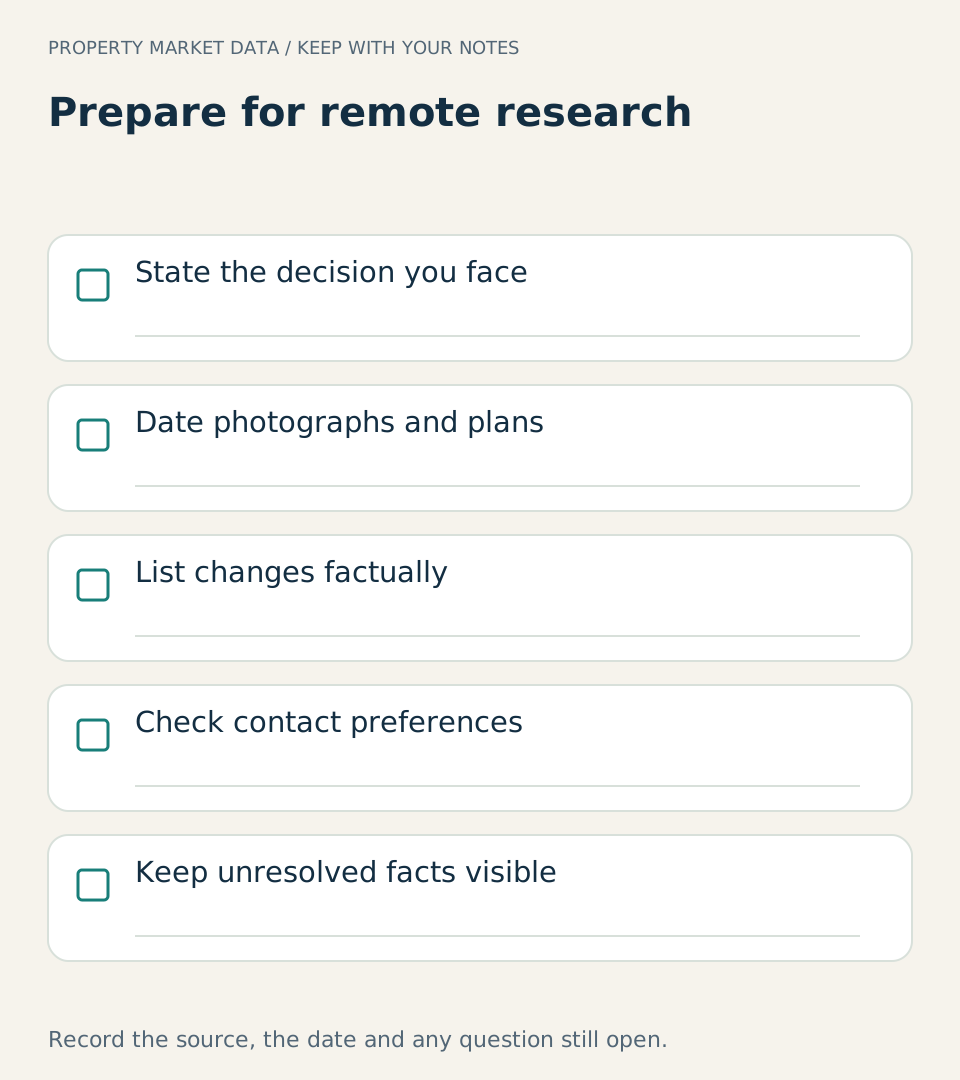
State the decision you face; Date photographs and plans; List changes factually; Check contact preferences; Keep unresolved facts visible. Record the supporting document and any unanswered question.
Decide when a visit would add information
Use the gaps in your research to decide what needs further attention. An unusual layout, significant alterations or uncertainty about condition can make direct observation particularly useful. The question is not whether a visit is old-fashioned. It is whether important evidence is still missing.
For help weighing the limitations of an automated result, see how to judge online valuation accuracy. If an organisation requests a formal report, confirm its instructions before commissioning any remote service.
Use PMD to prepare your next decision
PMD brings comparable sales, local evidence and an explained estimate into a property report. That can help you organise questions before discussing an asking price. Examine the sample and data explanation to understand the format and limitations.
Keep a separate record of anything the report cannot establish about your home. You can then ask an agent or an appropriate specialist a focused question rather than accepting a figure without understanding its basis. Remote research is useful when it makes the next conversation more informed.
When you decide to arrange a visit, use the valuation appointment preparation guide to organise the questions you want answered.
Sources
- Rightmove, How online valuations work: Data-based estimates, comparable evidence and limits of remote assessment
- Royal Institution of Chartered Surveyors, Automated valuation models roadmap: Model scope, explainability and evidence limitations