
Property valuations
What should you do if an online valuation has the wrong property details?
A valuation is harder to use when its description does not match the home. Before arguing about the price, identify the incorrect fact, its source and what the provider can change. Updating a visible detail and recalculating an estimate are not necessarily the same action.
This is an estimate from comparable sales, not a RICS or mortgage valuation, and not a survey.
Start with the mismatch you can demonstrate
Write down the precise discrepancy. The result may show a different bedroom count, an old floor area, the wrong property type or the neighbouring flat. “The valuation is too low” is a conclusion. “The record describes a different dwelling” is a fact you can investigate.
Check the whole address, including any unit identifier. A building divided into flats needs the right dwelling matched, not merely the right street number. Keep a screenshot or note of the description so you can explain the problem without relying on memory.
Provider processes differ. Zoopla's support information explains viewing and editing property attributes. It specifically says that editing those displayed attributes does not directly change its estimate. Do not assume another provider uses the same arrangement. Do not assume the same update route applies to every valuation service.
Establish where the detail came from
Ask which source supplied the disputed information. A listing, energy certificate, historic transaction or detail entered by a user can have a different date and purpose. The first useful correction is often identifying which record is being used.
If size is the issue, see how to check the floor area used in a property assessment. Different measurements can refer to different spaces. Sending a larger number without knowing its basis may replace one uncertainty with another.
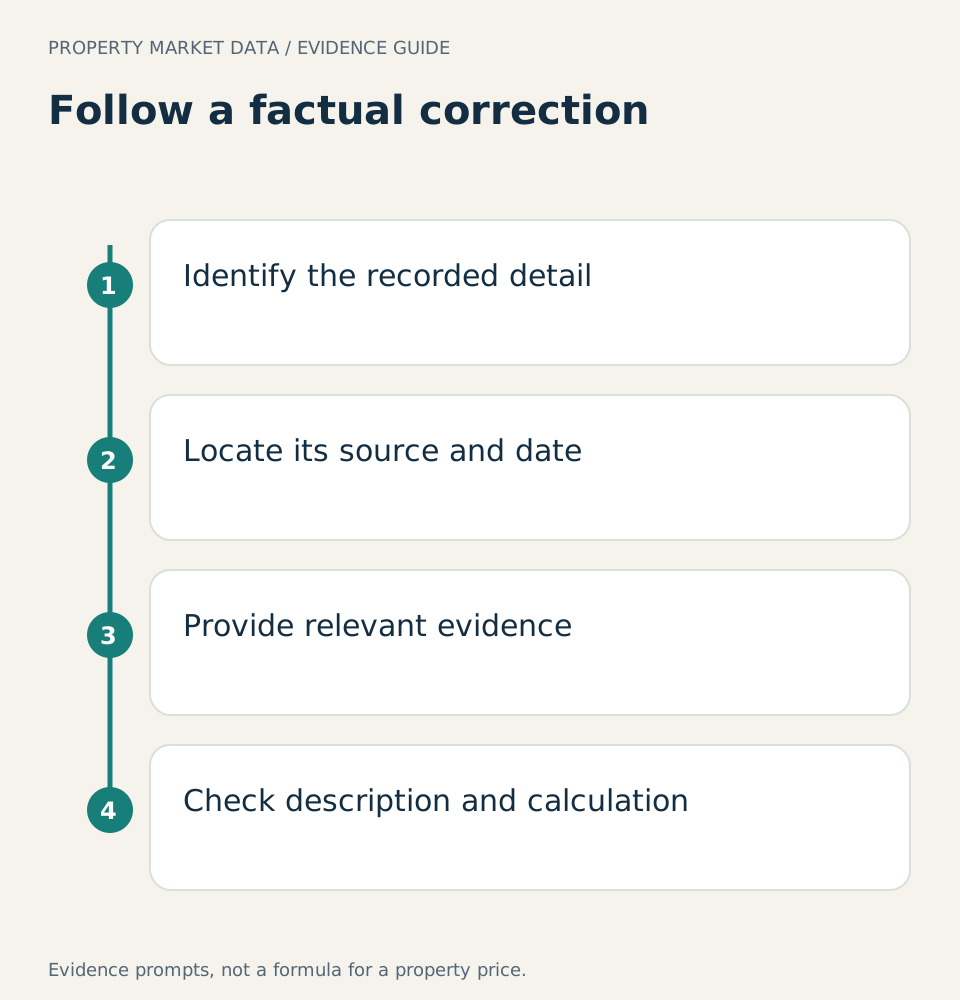
Identify the recorded detail; Locate its source and date; Provide relevant evidence; Check description and calculation. Read the evidence together before making a property-specific judgement.
Our suggested correction note has three parts: the recorded fact, your proposed correction and the evidence supporting it. Include dates. A floor plan prepared before an alteration may not resolve the present layout.
What evidence should you send?
Ask the provider what it accepts before sending documents. Supply only what is relevant through its appropriate channel. A current plan or a factual explanation may help with a record issue, but it does not certify construction, permissions or title.
Do not submit assumptions as facts. If you are unsure whether a converted space is included in the measurement, say so. An honest unresolved question is preferable to forcing a favourable description into the record.
Ask what the correction actually changes
There are at least two practical questions. Has the displayed description been amended? Has the valuation calculation used the amended information? Ask each separately.
A changed description does not establish a changed estimate. Conversely, a recalculation that produces a similar number does not necessarily mean the correction was ignored. Ask for an explanation of the result rather than expecting a particular uplift.
Keep a correction log
| Check | What to establish |
|---|---|
| Disputed field | Copy the exact bedroom, type or area entry that appears wrong. |
| Supporting material | Identify the document and its date, not just your preferred replacement. |
| Provider response | Record whether the record changed and which service was affected. |
| Later estimate | Check whether a new calculation used the corrected information. |
A corrected public display and a corrected model input are different achievements. Ask which has happened. Keep the earlier result so you can compare explanations, but do not attribute every later price change to your correction. New sales evidence or a changed assessment date may also affect the result.
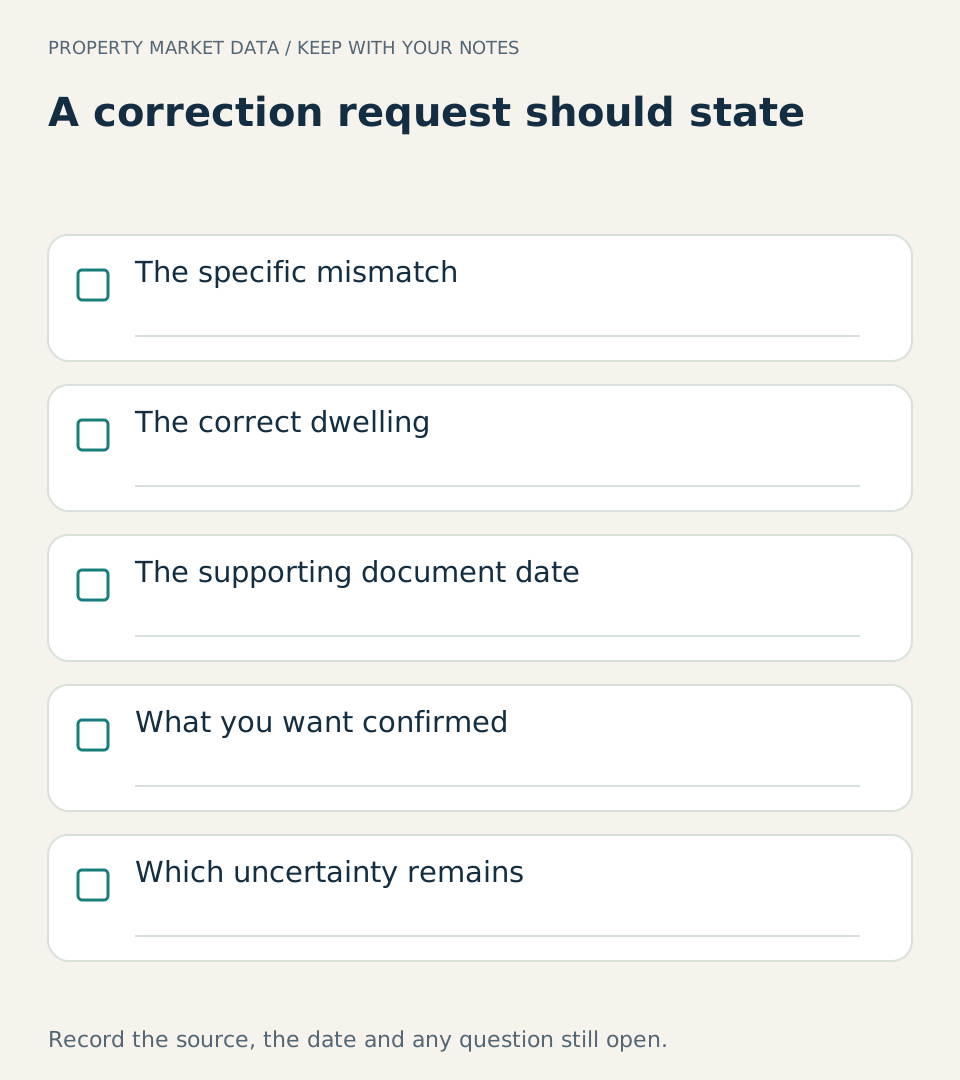
The specific mismatch; The correct dwelling; The supporting document date; What you want confirmed; Which uncertainty remains. Record the supporting document and any unanswered question.
Keep the response with the evidence you supplied. If a service cannot incorporate the change, that limitation matters when you decide whether the output is suitable for your decision.
Distinguish a mistake from a changing market estimate
A number can change even when the property's details stay the same. New market evidence and provider updates are different from correcting an incorrect record. Why property estimates change deals with that separate question.
Once you have checked the property match, return to the evidence checks for an online valuation. A correct address is necessary for a useful comparison, but it does not establish that every comparable sale is relevant.
Use the evidence in your PMD decision
When reviewing a PMD report, compare the property description with what you know and record material discrepancies. Read the data explanation before assuming which inputs are present or how an adjustment works.
If the result leaves an important fact unresolved, ask for clarification before relying on it. The useful outcome is an assessment based on an understood property description, with remaining limits visible. It is not simply a higher number.
Sources
- Zoopla, Viewing property details: Provider-specific property attributes, edit routes and distinction from estimate inputs
- Government guidance, Find an energy certificate: Finding existing energy certificates rather than assuming current measurement
- Royal Institution of Chartered Surveyors, Automated valuation models roadmap: Model scope, explainability and evidence limitations