
Buying and offers
Best and Final Offers: How Buyers Should Decide
Being asked for your best and final offer can feel like an invitation to guess what everyone else will bid. You usually will not know. The safer approach is to decide what the property is worth to you, what you can afford and which terms make your offer credible, without relying on the idea that the highest bid must win.
This is an estimate from comparable sales, not a RICS or mortgage valuation, and not a survey.

A best and final offer is still your decision
When an estate agent asks interested buyers to submit best and final offers, the property may have attracted competing interest. You might be given a deadline and asked to state both your price and buying position.
That can create pressure to offer more than you intended. Resist treating the process as a game you must win. Your objective is to buy a suitable home on terms you can sustain, not simply to outbid an unknown competitor.
A request for best and final offers does not, by itself, guarantee that the seller will accept any offer or that the property will be sold to the highest bidder.
Establish what the agent is asking for
Ask for the submission deadline, how offers should be made and what information the seller wants alongside the price. Check whether the seller expects proof of funds, mortgage arrangements, chain details or a preferred completion timetable.
Ask whether offers will be presented together and whether the seller may negotiate afterwards. The agent may not be able to disclose other bids, and you should not expect them to.
Estate agents must pass offers to the seller in accordance with applicable legal requirements, subject to limited exceptions such as a seller's written instruction. The seller decides whether to accept an offer, not the agent.
Decide your ceiling before submitting
Your ceiling should be based on the property, relevant completed sales, your borrowing capacity and the cash you need to retain after completion. It should not be based on a guess about another bidder.
Allow for stamp duty where applicable, legal costs, moving costs, immediate repairs and an emergency reserve. If you need a mortgage, remember that a lender may assess the property below your offer. Mortgage down valuations explains the resulting funding risk.
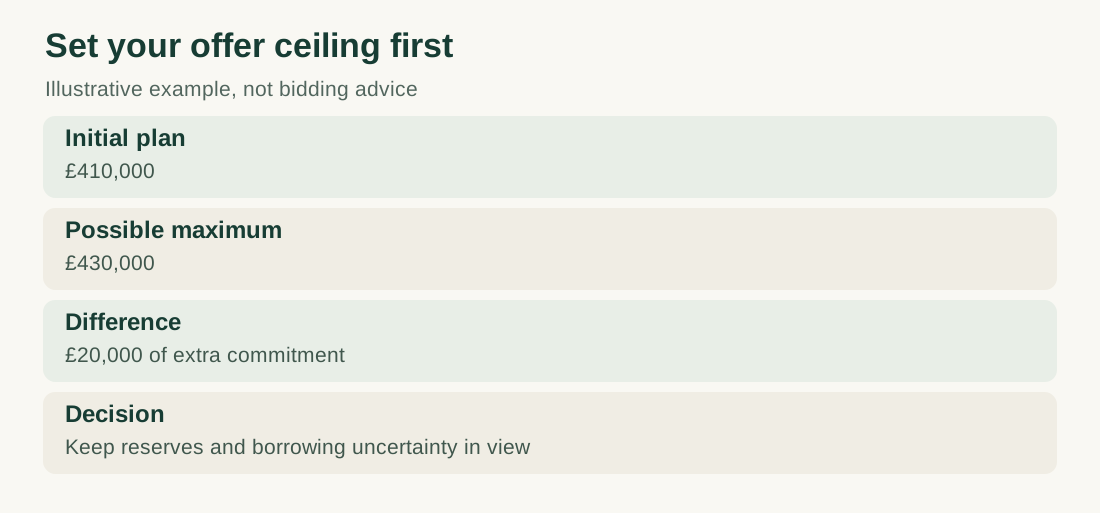
Illustrative example. You initially planned to offer £410,000 and can technically stretch to £430,000. That does not mean £430,000 is a sensible bid. If the extra £20,000 would leave you unable to address a known roof problem or would depend on borrowing that is not confirmed, it may be beyond your prudent limit.
 Illustrative example
Initial plan: £410,000. Possible maximum: £430,000. Difference: £20,000 of extra commitment. Decision: Keep reserves and borrowing uncertainty in view.
Make the terms easy to understand
A strong offer is clear about price and practical readiness. Explain whether you are chain-free, have a property under offer, have an agreement in principle or can show available funds. State your preferred timetable without promising dates outside your control.
Avoid overstating your position. An agreement in principle is not a formal mortgage offer. Being 'cash' is meaningful only if the funds are genuinely available and their source can be evidenced when required.
If you need to sell a property first, explain the stage of that sale accurately. For more on how sellers weigh certainty against price, see buyer position, chains and funding.
Do not waive important checks to look competitive
You may be tempted to promise not to seek a survey or to proceed regardless of what the legal enquiries reveal. Such promises can expose you to risks you do not yet understand.
A seller may prefer a straightforward buyer, but your due diligence still matters. Ask your conveyancer and surveyor about any significant concerns before deciding how to proceed. A mortgage lender's valuation is not a substitute for a survey.
You can make your intentions clear without pretending that you already know the condition and legal status of the home.
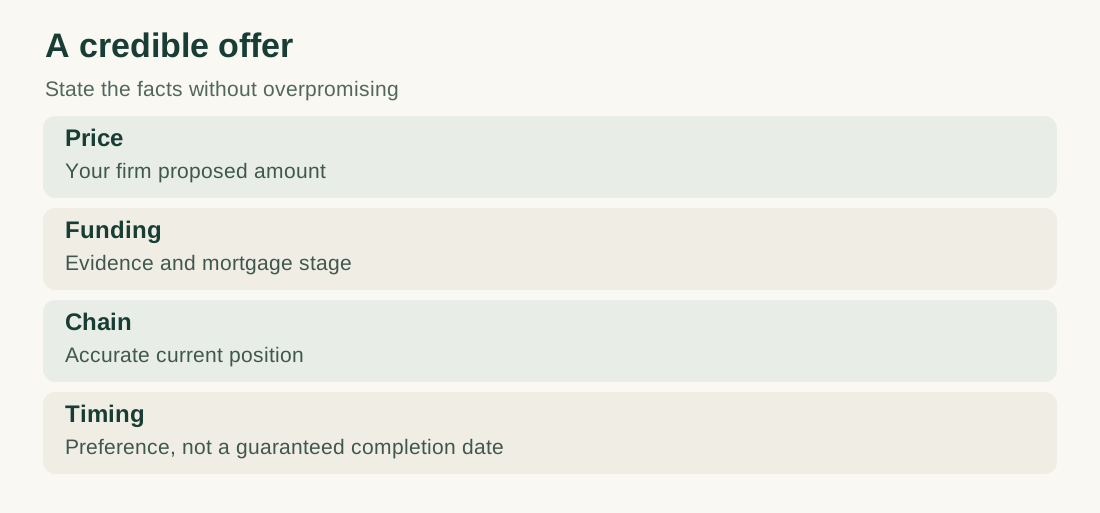
Price: Your firm proposed amount. Funding: Evidence and mortgage stage. Chain: Accurate current position. Timing: Preference, not a guaranteed completion date.
What happens after the deadline?
You might be accepted, rejected or asked for clarification. A seller can consider more than the price, including funding certainty and their own moving plans. An accepted offer in England and Wales does not normally create a binding property sale contract until exchange of contracts.
If you are unsuccessful, decide whether the home remains worth pursuing if the winning buyer withdraws. Do not automatically increase your offer just because you feel disappointed.
For the evidence behind an offer, use how much to offer on a house. You can read about PMD's buyer report for a home you are considering.
Write down your maximum comfortable price before you hear the result. The right offer is one you can stand behind whether the seller says yes or no.
Sources
- HM Land Registry, About the Price Paid Data: Explains completed sale price records and their coverage
- The Property Ombudsman, Codes of Practice: Estate agent handling of offers, subject to current code verification