
Buying and offers
Does being chain-free make your house offer stronger?
Two buyers may offer the same price but present very different levels of uncertainty. Sellers often care about timing and the likelihood of completion as well as the headline amount. You can explain your position clearly without exaggerating how secure it is.
This is an estimate from comparable sales, not a RICS or mortgage valuation, and not a survey.
A seller is choosing a route to completion, not just a number
Imagine two offers at the same price. One buyer needs to sell a home that is not yet on the market. The other has already sold, has a deposit available and has spoken to a lender. The second may look easier to proceed with, but that does not make completion certain.
A chain-free buyer can still encounter mortgage, survey, title or personal circumstances that delay a transaction. A buyer in a short, well-organised chain may be perfectly credible. The point is to explain your actual position, not to attach a label that promises more than it can deliver.
Describe your chain accurately
If you have no property to sell, say so. If your home is under offer, explain whether the transaction is progressing and what you know about the chain beneath your buyer. If you have not yet marketed your home, be open about that too.
'Cash buyer' should not be used casually to mean someone who expects to raise money later. If you are buying without mortgage finance, you may be asked for appropriate evidence of funds. If you need a mortgage, say that your offer is subject to finance and explain what preparatory steps you have taken.
Your conveyancer and agent will still have identity and source-of-funds requirements to address. Being organised with documents can reduce avoidable delay, but it does not remove those checks.
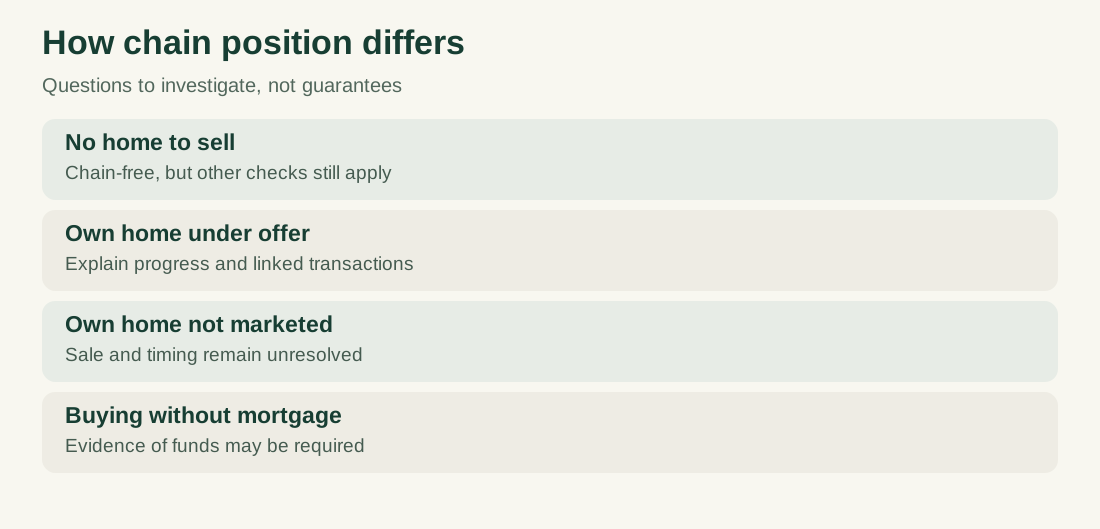
No home to sell: Chain-free, but other checks still apply. Own home under offer: Explain progress and linked transactions. Own home not marketed: Sale and timing remain unresolved. Buying without mortgage: Evidence of funds may be required.
Explain what is ready and what is still conditional
A mortgage agreement in principle indicates that a lender has carried out an initial assessment, subject to its conditions. It is not a final offer of lending on the particular property. Your application may still depend on valuation, underwriting and documentation.
If you have a deposit, identify whether it is in accessible savings, proceeds from a sale or a gift. The distinction matters because each can have different evidence requirements and timing implications. Do not share sensitive bank statements with an unknown person simply to make your offer sound convincing. Ask the estate agent or conveyancer how proof should be provided securely.
For the amount to offer, see how much to offer on a house. This guide is about credibility, not calculating a price.
Timing can be valuable, but avoid promises
Ask the agent whether the seller has an onward purchase, a fixed deadline or a preference for flexibility. A seller hoping to coordinate two moves may value a buyer who can work to a realistic timetable. Another seller may need a slower completion while they find a new home.
Do not promise exchange or completion by a specific date before your conveyancer and lender have assessed what is possible. You can state your preference and willingness to cooperate without guaranteeing an outcome beyond your control.
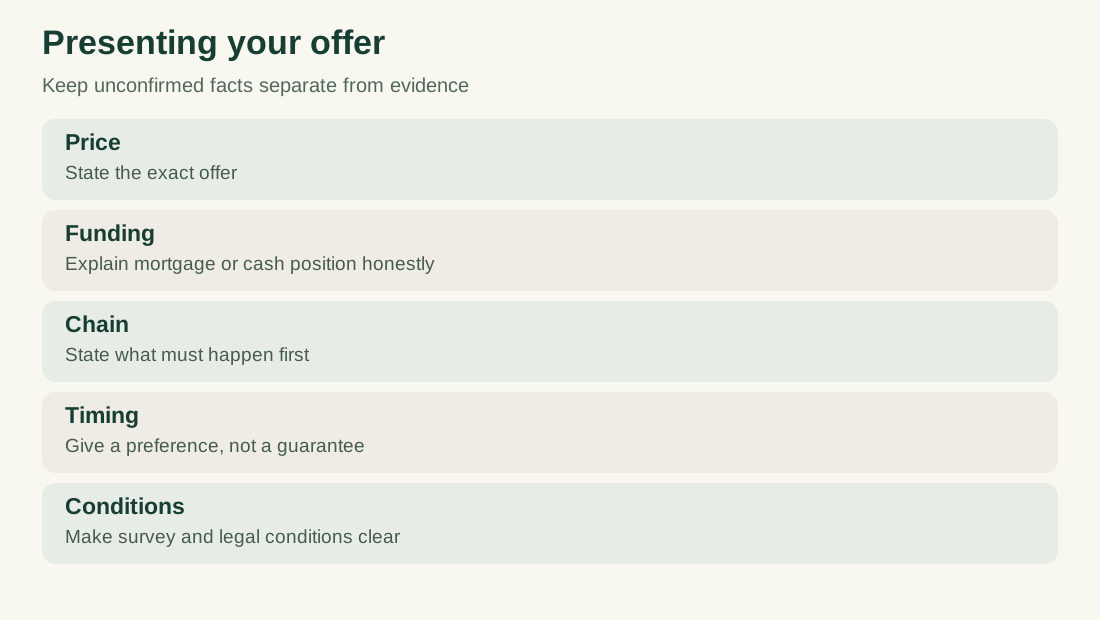
Price: State the exact offer. Funding: Explain mortgage or cash position honestly. Chain: State what must happen first. Timing: Give a preference, not a guarantee. Conditions: Make survey and legal conditions clear.
Put the offer in a short, factual note
A clear offer can state the proposed price, whether you need to sell, your funding position, your preferred timing and any conditions you are attaching. It can also confirm that you are ready to instruct a conveyancer and arrange a survey if the offer is accepted.
There is no need to turn the note into a personal essay or disclose financial information that is not relevant. The agent should present offers to the seller in accordance with applicable requirements. The seller remains free to weigh price, certainty and their own priorities.
Why a stronger position does not guarantee a discount
Some sellers will accept less for a transaction they perceive as more straightforward. Others will prefer the highest offer or have financial obligations that leave little room to negotiate. No universal percentage can be attached to being chain-free.
Illustrative example. A buyer offers slightly below asking price with no onward sale. Another offers more but must first find a buyer for their own home. Either offer could be preferred depending on the seller's priorities and the details of each transaction. The chain-free buyer cannot assume they will win simply by describing their position.
If competing bids lead to a formal request for best and final offers, the best-and-final offers guide covers that separate process. Sellers weighing competing proposals may also find how to compare buyers and offers useful.
You can read about PMD's buyer report for a home you are considering. A property market estimate cannot certify a buyer's financial position or guarantee a sale.
The strongest presentation of your offer is accurate, concise and verifiable. Make it easy for the seller to understand what is ready, what depends on others and which dates are preferences rather than promises.
Sources
- HM Land Registry, About the Price Paid Data: Explains recorded completed sale price information and limitations
- MoneyHelper, Mortgages: Consumer guidance on mortgage decisions and home buying, URL to verify before publishing