
Selling your home
How does a tenant in place affect a property price assessment?
A property sold with an existing tenancy may offer a different transaction from an empty home. Establish the actual occupation and legal arrangement before comparing prices. Neither rental income nor an online residential estimate settles every question about the interest being sold.
This is an estimate from comparable sales, not a RICS or mortgage valuation, and not a survey.
Describe the proposed sale accurately
Say whether the proposed transaction includes an existing tenancy and what information is available about it. Ask the appropriate legal adviser to establish the position. Do not assume the buyer receives vacant possession merely because that would make the comparison easier.
Current government tenancy guidance for England provides legal context, but it should not be generalised across every agreement or across England and Wales. The actual jurisdiction, tenancy and transaction need appropriate current advice.
This article is not a method for obtaining possession or deciding which notice to serve. It concerns making the valuation instruction and market enquiry accurate.
Keep rental evidence and legal evidence separate
Ask for the relevant tenancy and payment information through the proper route. A rent figure should be tied to records and context rather than repeated from an advertisement. The existence of rent does not determine the value of every property interest.
Identify what the buyer is expected to acquire. A specialist assessment may need different information from a general homeowner enquiry. The different valuation purposes explains why the instruction matters.
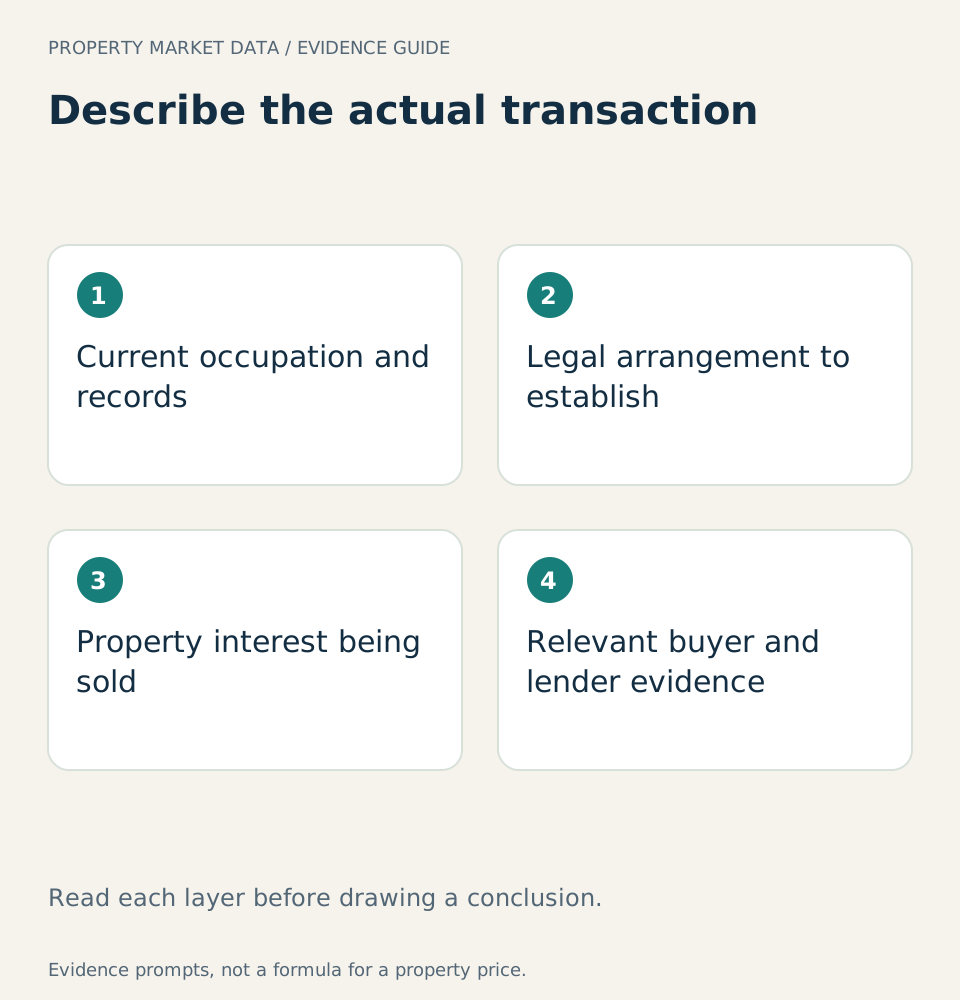
Current occupation and records; Legal arrangement to establish; Property interest being sold; Relevant buyer and lender evidence. Read the evidence together before making a property-specific judgement.
Do not assume a universal occupied discount
A comparison with an empty residential sale may provide background while leaving the actual transaction unaddressed. Ask how relevant buyer evidence reflects the occupation and arrangement.
Equally, a simple income multiple should not be treated as a full professional assessment. If an investment valuation is required, commission an appropriate provider and define the scope.
Match the evidence to the interest
Choosing comparable sales explains relevance. For a tenanted sale, ask whether the transaction circumstances of each comparison are known. A shared property type and postcode do not establish the same legal or buyer position.
Where the relevant information is unavailable, keep that uncertainty explicit. Do not describe a vacant-home estimate as a confirmed figure for the occupied transaction.
Define the sale being discussed
| Check | What to establish |
|---|---|
| Occupation | Record the actual tenancy and occupation position. |
| Buyer type | Distinguish an investor purchase from a proposed owner-occupier purchase. |
| Documents | Provide the relevant tenancy and property records to advisers. |
| Assumption | Make clear whether evidence concerns an occupied or vacant home. |
Do not assume vacant possession will be available merely because it would widen the buyer pool. Establish the legal position before building a sale plan around it. An investor may ask different questions from a household seeking a home. Keep rental performance, legal rights and residential sale evidence separate so the assessment scope is explicit.
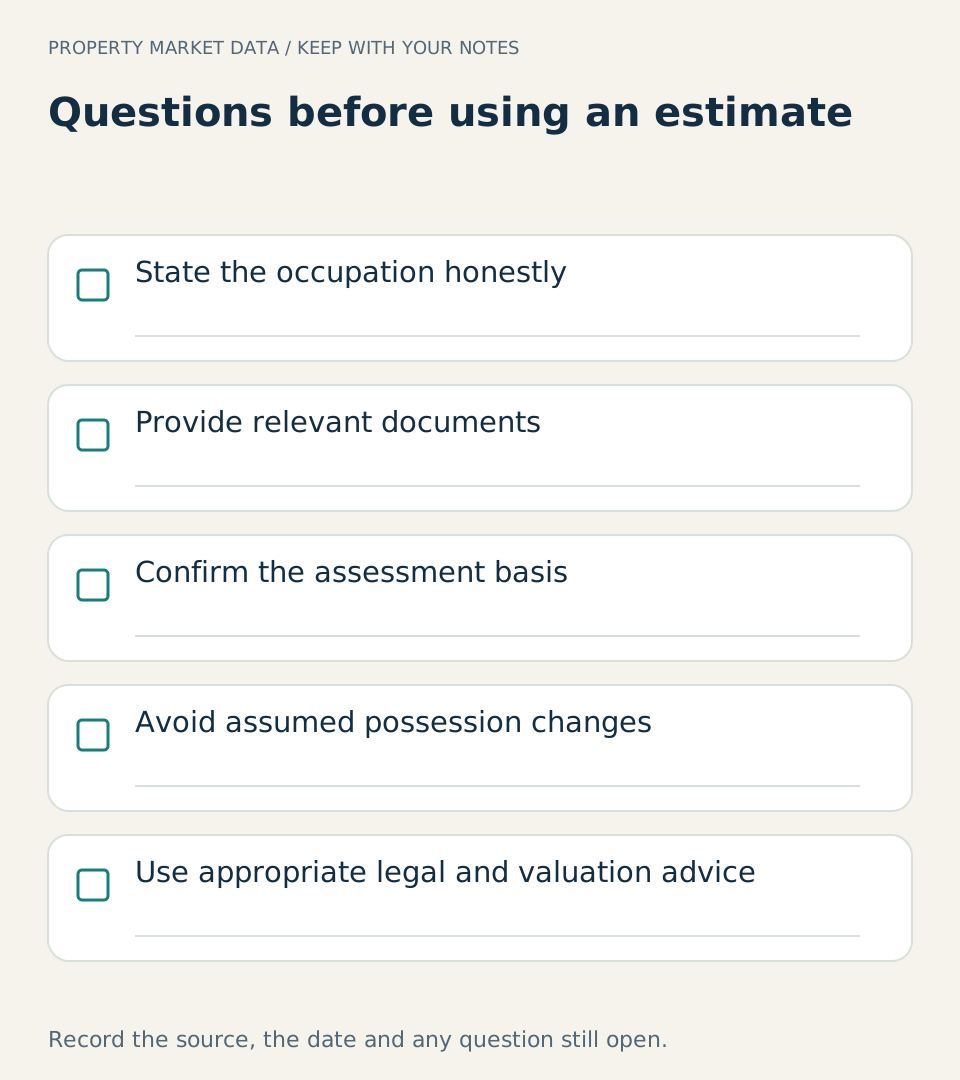
State the occupation honestly; Provide relevant documents; Confirm the assessment basis; Avoid assumed possession changes; Use appropriate legal and valuation advice. Record the supporting document and any unanswered question.
Ask about funding and transaction requirements
Mortgage valuation purpose explains the lender's separate decision. The applicant should give the lender or adviser accurate information about the actual arrangement rather than infer suitability from a report produced for another purpose.
The conveyancer and relevant professionals should establish what information can be shared and what the buyer needs. Respect the occupant's situation and use appropriate channels for access and documentation.
Ask anyone providing an assessment to explain the basis, date, assumptions and intended recipient. A clear instruction is more useful than a number whose occupation assumption is unstated.
Prepare a concise instruction record
Our suggested note includes the property, actual occupation, transaction proposed and questions for legal and valuation advisers. Retain source documents and identify any unresolved issue. Do not turn an incomplete summary into an assurance about the tenancy.
That record helps separate current facts from a future plan. A hoped-for change in occupation should not be presented as already achieved.
PMD's limited role
PMD does not certify tenancy status or provide a formal investment valuation. Confirm whether its residential research is suitable for the actual enquiry before ordering.
If you separately need comparable and local-market information for an eligible residential decision, read the data limits and keep that research distinct from the legal and investment assessment.
The transaction being valued must be the transaction actually proposed. Clarity about occupation and scope comes before a meaningful price comparison.
Sources
- Government guidance, Assured periodic tenancies for tenants: England tenancy context; actual legal position requires current advice
- Royal Institution of Chartered Surveyors, Red Book: Professional valuation standards and scoped instructions
- MoneyHelper, Remortgaging: Lender assessment and remortgage process, not personalised lending advice