
Specialist property valuations
How should a history of subsidence affect your property decision?
The word subsidence can refer to a suspicion, an active investigation or a documented past problem. Those are not the same circumstances. Establish the professional findings and the sequence of events before using the label to judge a home's value.
This is an estimate from comparable sales, not a RICS or mortgage valuation, and not a survey.
Find out what is actually known
Ask why subsidence is being mentioned. Has a professional identified movement, or has someone simply noticed a crack? A buyer, seller or online report should not diagnose the cause from a photograph.
The professional consumer guide to subsidence explains that causes and possible remedies vary. The evidence you need concerns this building, its investigation and the findings, rather than a standard response to the word.
Request available reports and identify their authors, scope and dates. If an investigation remains open, keep that fact distinct from a completed repair history.
Put the records into a chronology
Our suggested chronology begins with the observation, then investigation, findings, proposed work, completed work and any follow-up evidence. Leave a gap visible when you do not have the relevant record.
Check whether the documents describe the same area of the property. An account of work to one part should not be expanded into a conclusion about all buildings or all future movement.
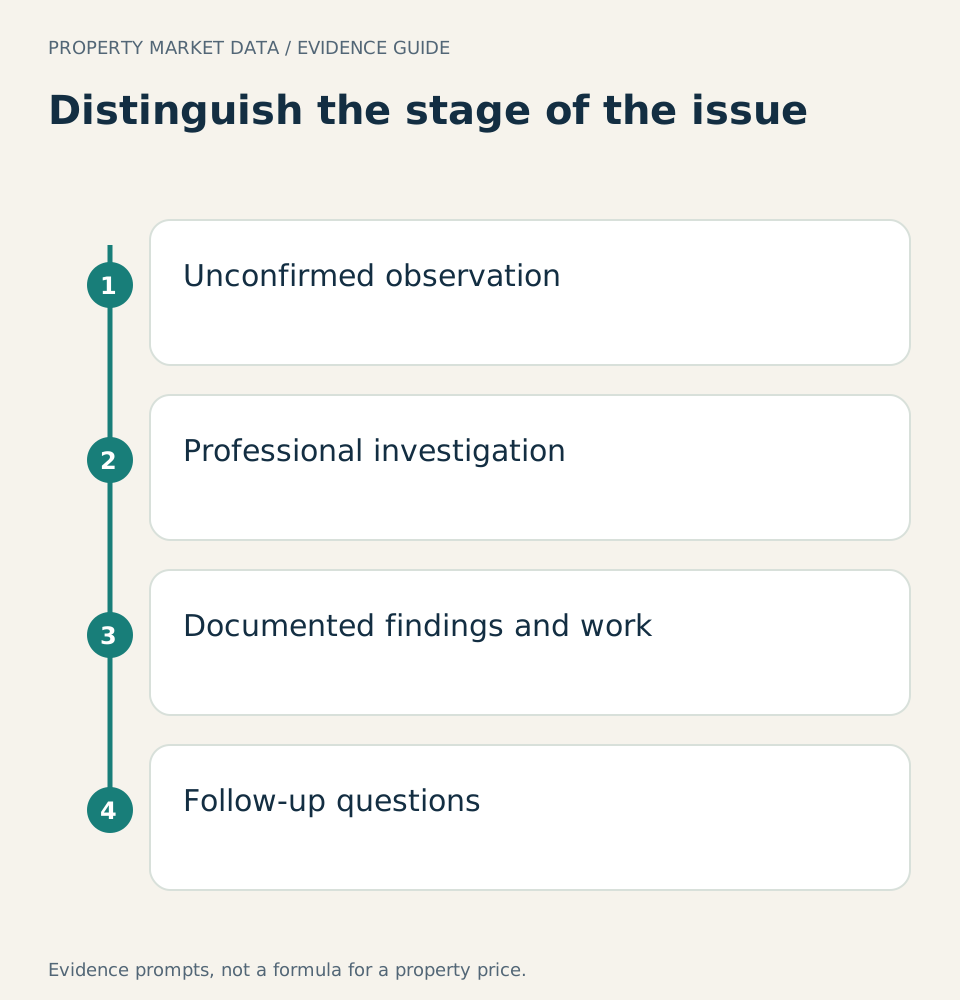
Unconfirmed observation; Professional investigation; Documented findings and work; Follow-up questions. Read the evidence together before making a property-specific judgement.
Condition and property assessment explains the wider need for evidence. It does not replace a structural investigation, and neither does the existence of an online valuation.
Avoid making the repair label do too much work
A mention of underpinning or another intervention should lead to questions about the actual work and subsequent findings. Do not assume every movement problem needs the same treatment, or that every completed intervention resolves every later concern.
Give the original documents to a suitably experienced professional. Ask what they establish and whether an additional inspection or other work is needed for your present decision.
Keep insurance and price questions separate
Ask an insurer about the property and intended cover. Do not assume that a previous policy automatically determines a future buyer's position. Where reconstruction cost is relevant, insurance rebuild assessment is a different task from estimating the sale price.
A market comparison should explain whether comparable homes have relevant circumstances. An unexplained deduction from a general house value is not evidence of how buyers respond to this home's documented history.
Build a chronology of movement evidence
| Check | What to establish |
|---|---|
| First concern | Record when the issue was noticed and who assessed it. |
| Investigation | Keep the professional explanation and any monitoring records. |
| Repair | Identify the completed work and associated certificates or reports. |
| Current position | Ask what evidence addresses present condition and insurance questions. |
Avoid describing an old repair as proof that every current concern has been resolved. Equally, a historic issue should not be treated as a current diagnosis without evidence. A clear chronology lets a surveyor, insurer or lender identify the questions still open. It also gives the pricing discussion a factual basis rather than a label alone.
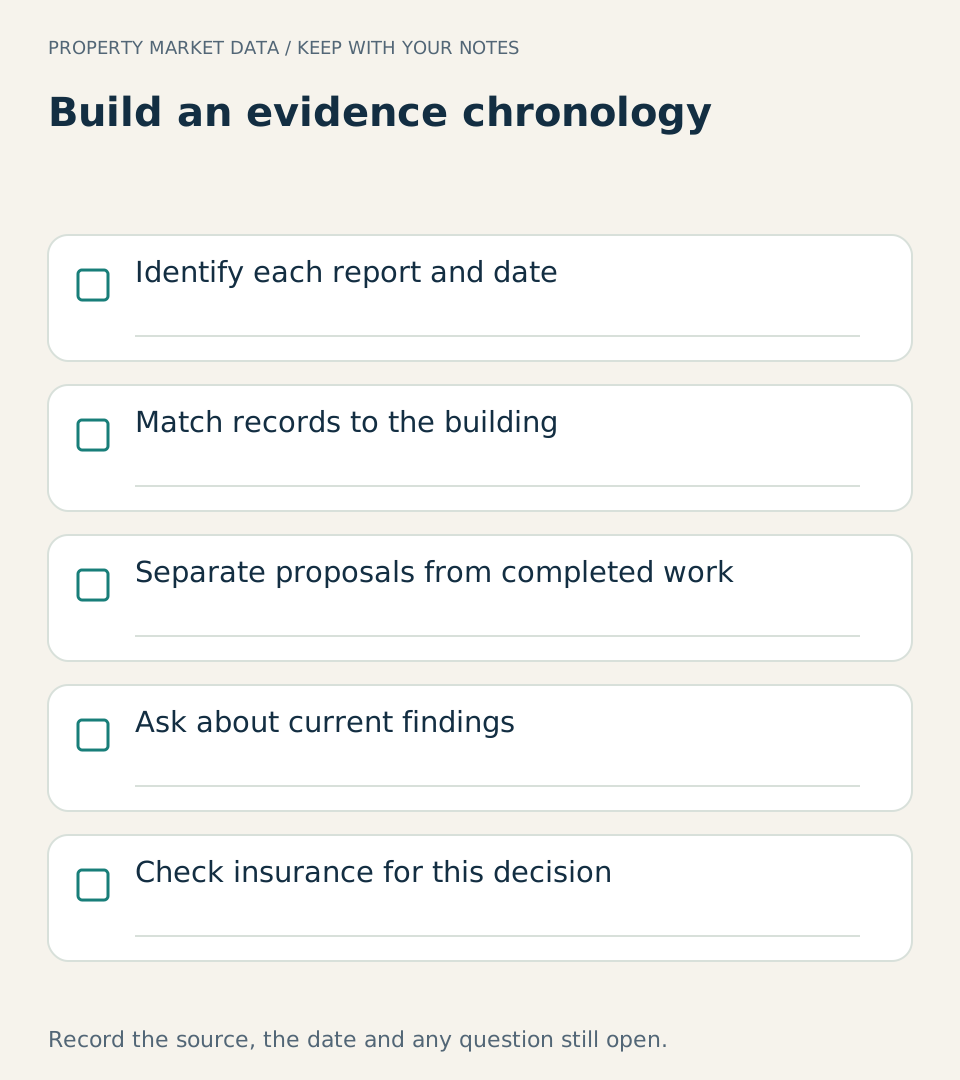
Identify each report and date; Match records to the building; Separate proposals from completed work; Ask about current findings; Check insurance for this decision. Record the supporting document and any unanswered question.
Ask the person proposing a price which uncertainties remain. The answer may depend on what the investigation and follow-up records actually show. A neat percentage cannot resolve an unfinished evidence question.
If a survey raises the issue during a purchase
Read how to approach negotiation after a survey for the separate transaction decision. Obtain appropriate findings and cost information before proposing a change. A survey recommendation to investigate is not the same as a confirmed repair quotation.
You may decide further work is necessary before proceeding. That is a question about your decision and professional evidence, not simply an opportunity to request a discount.
What PMD can contribute
A PMD report can organise available sales and local-market context for an eligible property. It cannot diagnose movement, evaluate repair adequacy or establish insurer and lender acceptance. Read the scope limits before choosing it.
Use the market research only alongside the technical findings. The clearer your chronology and outstanding questions, the more useful the next conversation with an agent, valuer or specialist can be.
Sources
- Royal Institution of Chartered Surveyors, Subsidence consumer guide: Professional investigation and distinctions between causes and remedies
- Royal Institution of Chartered Surveyors, Reinstatement assessment factors: Insurance reconstruction assessment differs from market value
- Royal Institution of Chartered Surveyors, Automated valuation models roadmap: Model scope, explainability and evidence limitations