
Specialist property valuations
How does non-standard construction affect a property assessment?
A construction label can affect the questions buyers and lenders ask, but it should not become an automatic discount. Establish how the home was built, what evidence exists about its condition and what the intended purchaser needs before judging the price.
This is an estimate from comparable sales, not a RICS or mortgage valuation, and not a survey.
Identify the building before assessing the label
Ask what the description means for this home. “Non-standard” can be used loosely in marketing or lending conversations. It is not a substitute for identifying the actual construction and obtaining suitable advice.
Keep the source of the description in your notes. A seller's recollection, an original plan and a professional report have different evidential roles. Ask a suitably experienced surveyor what can be established and what further investigation is needed.
Professional guidance on property assessment makes scope and evidence important. An online model's description should not be taken as confirmation of the construction or the condition of concealed parts.
Separate identification, condition and lending
These are different questions. Knowing a construction type does not establish the state of a particular building. Knowing that work was carried out does not establish what every lender will accept. Keep each question with the person competent to answer it.
Ask for available reports and relevant repair or alteration records. Confirm what was inspected, when and for which purpose. A report about part of a building should not be read as covering every structure on the site.
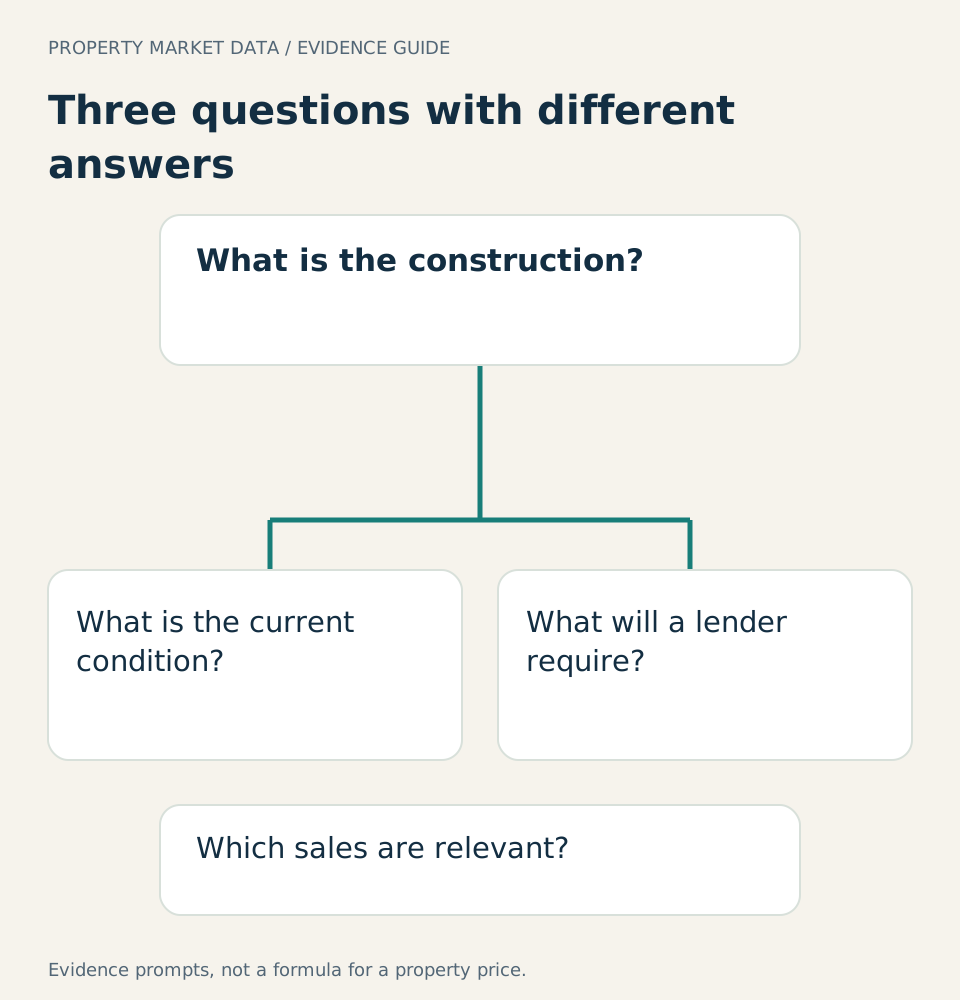
What is the construction?; What is the current condition?; What will a lender require?; Which sales are relevant?. Read the evidence together before making a property-specific judgement.
Condition and house value explains why appearance alone is insufficient evidence. Do not diagnose a structural concern or estimate a remedy from an online description.
Ask the lender about the actual property
If borrowing is required, give the adviser or lender the relevant property information. Do not assume that a general lending statement about one construction type answers the application for this home.
How lender valuations differ from your own estimate explains the purpose distinction. A PMD estimate does not change the lender's assessment or certify that mortgage funding is available.
Compare property evidence without a blanket deduction
The relevant completed sales need enough information to judge whether their construction and circumstances resemble this home. A nearby conventional house may provide context without supplying an exact adjustment.
Ask how the assessment handles these differences. Avoid a calculation that starts with a generic local average and subtracts an unexplained percentage. That creates apparent precision without demonstrating the effect on the relevant buyer market.
Identify before drawing conclusions
| Check | What to establish |
|---|---|
| Construction name | Obtain a reliable description rather than a local nickname. |
| Alterations | Check whether later work changes the relevant assessment. |
| Condition evidence | Keep professional observations separate from seller recollection. |
| Funding query | Ask the intended lender what information it needs for this building. |
The same broad construction label can cover properties with different histories and conditions. Do not transfer a conclusion from another house without checking the actual system and evidence. A buyer may need both an assessment of condition and a lender decision. Neither can be inferred solely from an automated estimate or a general description in a listing.
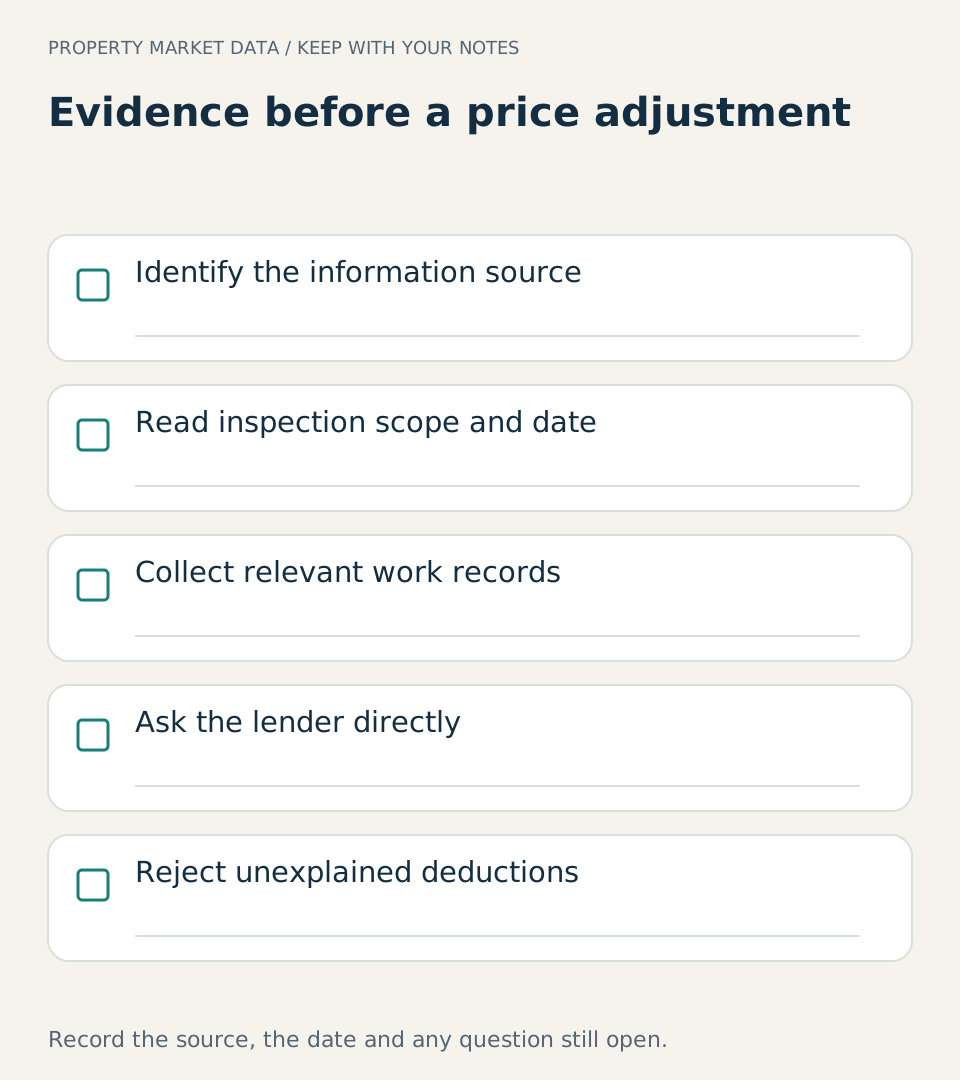
Identify the information source; Read inspection scope and date; Collect relevant work records; Ask the lender directly; Reject unexplained deductions. Record the supporting document and any unanswered question.
If the home was formerly local-authority owned, assessing an ex-local-authority property's value addresses the separate history question. Not every such home has the same construction. Do not substitute tenure or ownership history for physical evidence.
Make a useful document summary
Our recommendation is to record construction information, report scope, known work and outstanding questions on separate lines. Note dates and provide the original documents to the appropriate advisers.
Ask the agent or valuer which facts materially affect their assessment and which remain assumptions. A reassuring label is not enough; neither is an alarming category with no explanation.
PMD's role in the decision
PMD can organise available comparable sales and local context for eligible homes. It does not identify hidden construction, provide a survey or establish lender acceptance. Confirm the product's scope before paying and read its data limitations.
If technical evidence is the unresolved issue, deal with that first. Market research becomes more useful once the property being compared has been described accurately.
Sources
- Royal Institution of Chartered Surveyors, Automated valuation models roadmap: Model scope, explainability and evidence limitations
- Royal Institution of Chartered Surveyors, Red Book: Professional valuation standards and scoped instructions
- MoneyHelper, Remortgaging: Lender assessment and remortgage process, not personalised lending advice