
Specialist property valuations
How should you assess an ex-local-authority home’s value?
Former local-authority ownership does not describe every feature of a home. Compare the actual building, tenure and location before accepting a blanket price adjustment. The history may create questions, but those questions need property-specific evidence.
This is an estimate from comparable sales, not a RICS or mortgage valuation, and not a survey.
Separate history from the current property
Ask what the description refers to and what documents are available. Former ownership, present tenure, construction and condition are different facts. Do not use one as a substitute for another.
Record the current home and intended sale clearly. A house and a flat in a managed block can involve different information needs. A category label does not determine the practical experience or the relevant market comparison.
If a property was acquired through Right to Buy, the government's England scheme guidance describes potential conditions on a later sale. Ask the conveyancer whether relevant conditions apply to this property; do not assume that every former council home has the same position.
Establish construction rather than guessing it
Some buyers raise construction concerns when they hear the ownership history. That is a reason to establish the actual facts, not to presume a particular building method.
Non-standard construction assessment explains the different questions about identification, condition and lender requirements. Use appropriate professional evidence where the building needs investigation.
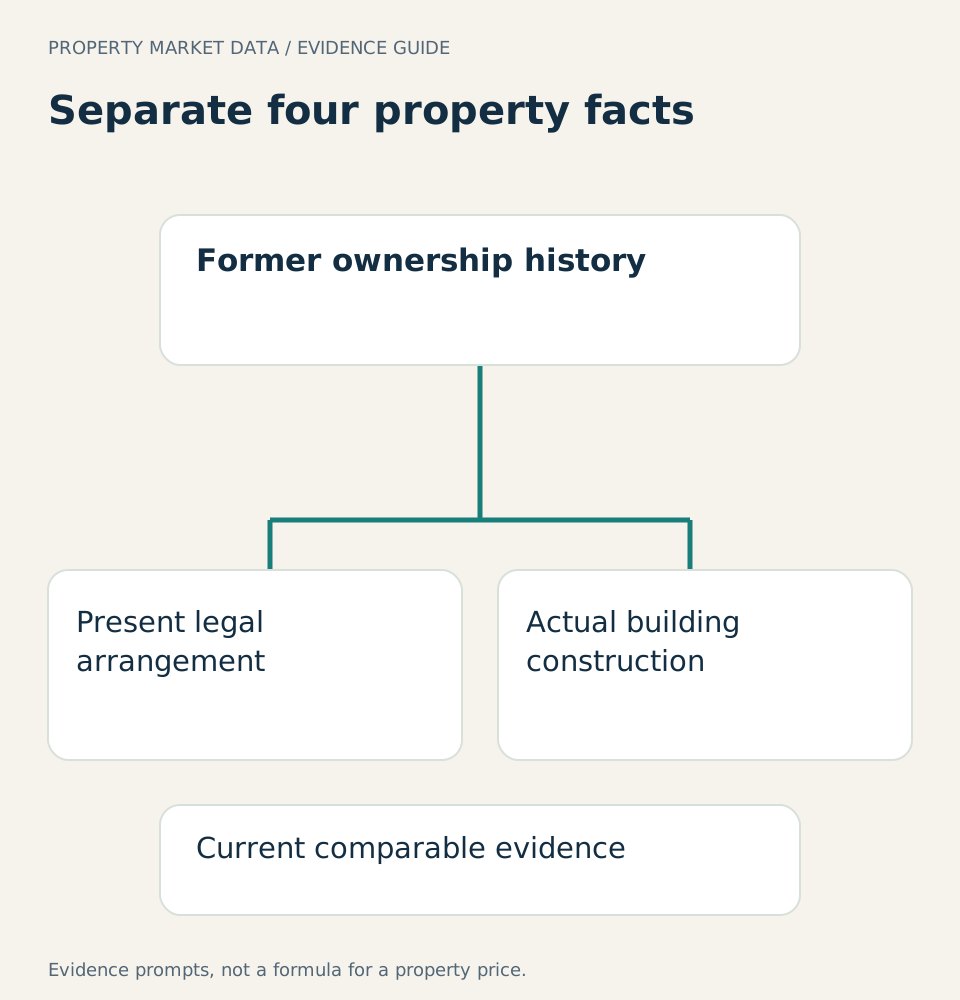
Former ownership history; Present legal arrangement; Actual building construction; Current comparable evidence. Read the evidence together before making a property-specific judgement.
For a flat, read the actual arrangement
Ask about the lease, building management and information supplied for the transaction. Assessing a leasehold flat's asking price covers the broader price comparison. The original ownership history does not by itself establish future charges or liabilities.
Keep any statement about costs tied to documents and dates. An old account or another resident's experience is not a complete answer about the home being purchased.
Choose evidence that matches the current home
How to choose comparable sales is the method. For this property, ask which completed transactions resemble its location, layout, construction, tenure and condition.
A comparison with another former council property may be useful, but it still needs checking. Two homes with the same history can differ in material ways. Equally, a nearby private-development sale may provide context without supporting a precise adjustment.
Replace the category with actual facts
| Check | What to establish |
|---|---|
| Property type | Separate houses from flats and identify the actual construction. |
| Tenure | Read the relevant ownership and lease information. |
| Obligations | Check current charges and any applicable sale conditions. |
| Comparison | Use similar homes in a relevant location and condition. |
The former ownership of a home is not a substitute for describing it. Two ex-local-authority properties can offer quite different accommodation, costs and buyer choices. Start with these differences and explain why each comparable belongs in the assessment. If a restriction may apply, have it checked rather than assuming that every property in the category has the same terms.
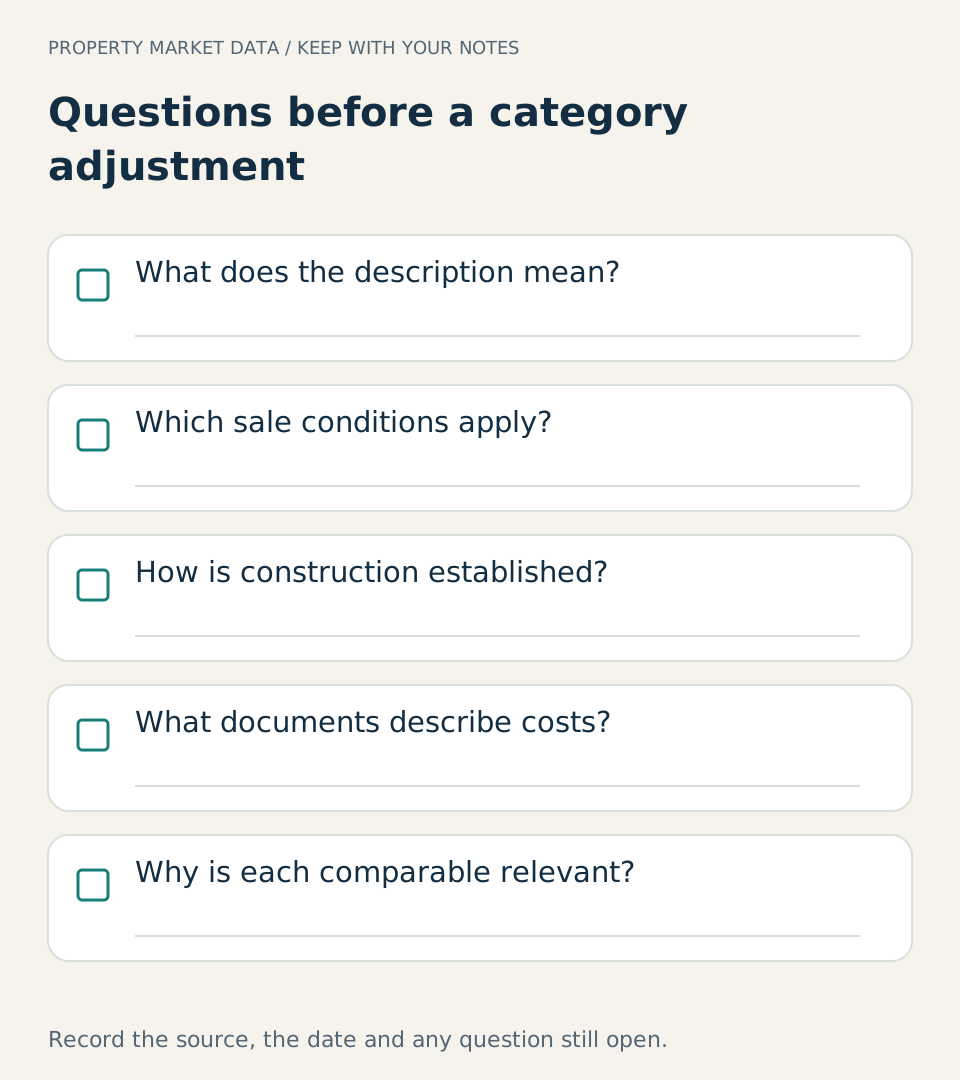
What does the description mean?; Which sale conditions apply?; How is construction established?; What documents describe costs?; Why is each comparable relevant? Record the supporting document and any unanswered question.
If an agent proposes a discount or premium, ask what sale evidence supports it. Avoid a conclusion that begins and ends with “these properties usually…”. A statement about the actual buyer market needs more than a category stereotype.
Prepare information buyers can use
For a seller, assemble a factual description and the relevant documents for your advisers. Resolve uncertainties where practical before incorporating them into marketing statements. You can describe genuine features without promising that every prospective lender will accept the home.
For a buyer, write down what remains unanswered and direct the question to the right person. A smaller price does not compensate automatically for unknown legal or technical facts.
Ask the assessor to distinguish known information from assumptions. That makes the final explanation more useful than an unexplained adjustment to a general local average.
PMD and the evidence question
PMD can organise available comparable sales and market context for eligible properties. It does not establish construction, legal conditions or building liabilities. Read the data limits before choosing a report.
Use the report to organise comparisons and questions about the actual home. Former ownership may be relevant context, but the assessment should be built from facts rather than a label alone.
Sources
- Government guidance, Selling a Right to Buy home: Potential sale conditions after Right to Buy; applicable England scheme
- Royal Institution of Chartered Surveyors, Automated valuation models roadmap: Model scope, explainability and evidence limitations
- HM Land Registry, Price Paid Data: Recorded transaction evidence and broad property-type categories