
Specialist property valuations
How much does garden and plot size matter to a house valuation?
A large garden can be an attraction, a responsibility or both. Its usefulness depends on the layout and the buyer's needs. When assessing a home's value, describe what the outdoor space offers instead of treating every extra piece of land as an identical unit.
This is an estimate from comparable sales, not a RICS or mortgage valuation, and not a survey.
Look at use rather than area alone
Start with the relationship between the house and outdoor space. Can you reach it conveniently? Is there usable level space, privacy or an arrangement that suits your intended routine? The answers need observation and factual description.
Area is useful information, but it does not describe shape, position or the upkeep a buyer may take on. A comparison should explain these characteristics instead of relying entirely on the plot-size figure in a listing.
Ask where the stated extent came from. Government boundary guidance notes that title plans generally show boundaries rather than precise surveyed lines. Where the extent is material, have the appropriate adviser establish what needs checking.
Describe the different spaces
Our suggested garden note separates access, usable areas, relationship to the rooms, privacy and maintenance questions. This is not a points system that calculates value. It helps you explain the home and compare a relevant alternative.
If the property includes paddocks or other substantial land, use assessing a house with land and outbuildings. A domestic garden question is not the same as assessing agricultural or other land use.
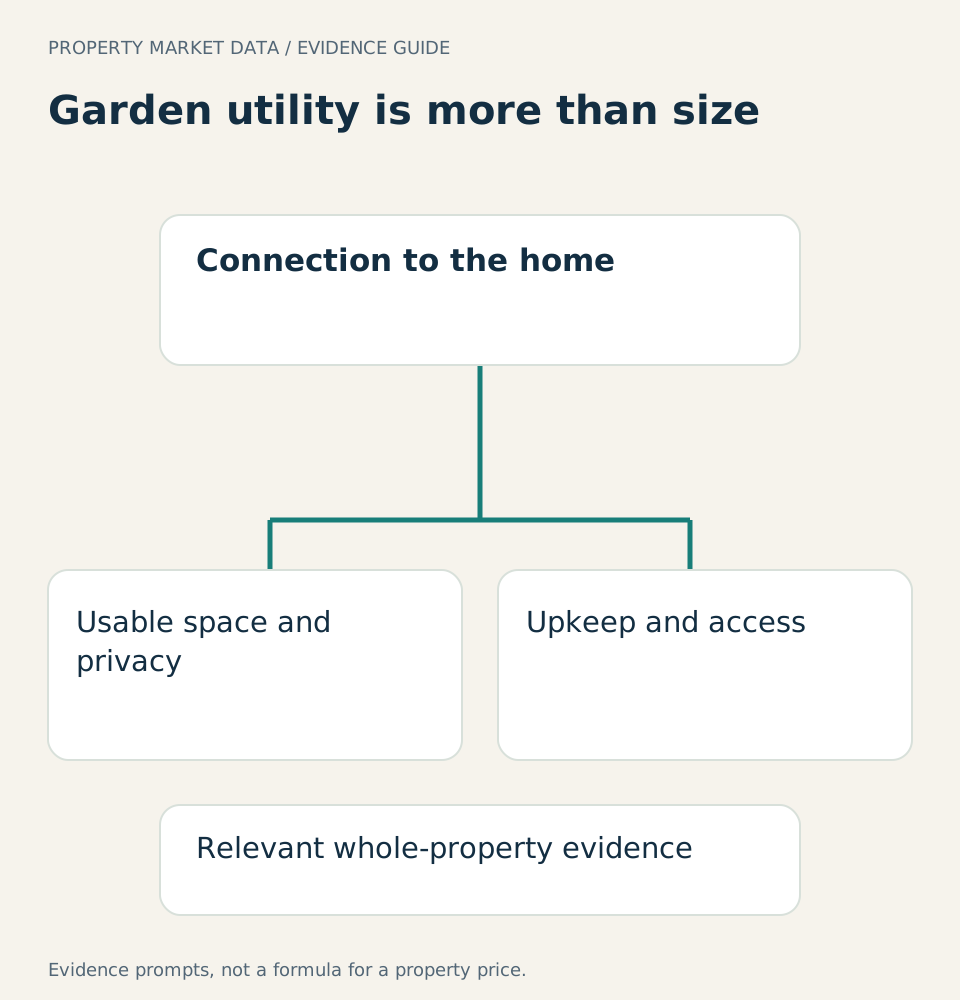
Connection to the home; Usable space and privacy; Upkeep and access; Relevant whole-property evidence. Read the evidence together before making a property-specific judgement.
Keep potential separate from existing use
A large plot does not by itself establish that another dwelling or extension can be built. If development potential is part of the sales description, ask what permission or other evidence supports it and obtain suitable planning advice.
Compare the present property first. Treating a hoped-for future project as already achieved can distort both the value discussion and the buyer's budget.
Compare whole homes with useful outdoor evidence
A completed transaction for a similar house may be relevant, but you still need to understand its outdoor arrangement. Ask whether the difference being discussed is known or merely guessed from a map.
How to choose comparable sales explains that selection process. The next street's largest plot is not automatically a benchmark for every garden in the area.
Parking, garages and vehicular access raise different questions. How parking and garages affect an assessment keeps those issues separate from garden utility, even when they occupy part of the same plot.
Describe usable outdoor space
| Check | What to establish |
|---|---|
| Shape | Note narrow sections and how the garden relates to the house. |
| Privacy | Consider overlooking and the position of neighbouring buildings. |
| Maintenance | Identify slopes, trees and practical access for upkeep. |
| Proposed use | Separate existing enjoyment from unconfirmed development ideas. |
A plot measurement does not describe all these features. Buyers may prefer a smaller useful garden to a larger area which does not suit their needs. Show the actual arrangement and use comparable properties with similar outdoor utility. If development is central to the pricing argument, establish the planning and legal position rather than treating spare land as an approved building opportunity.
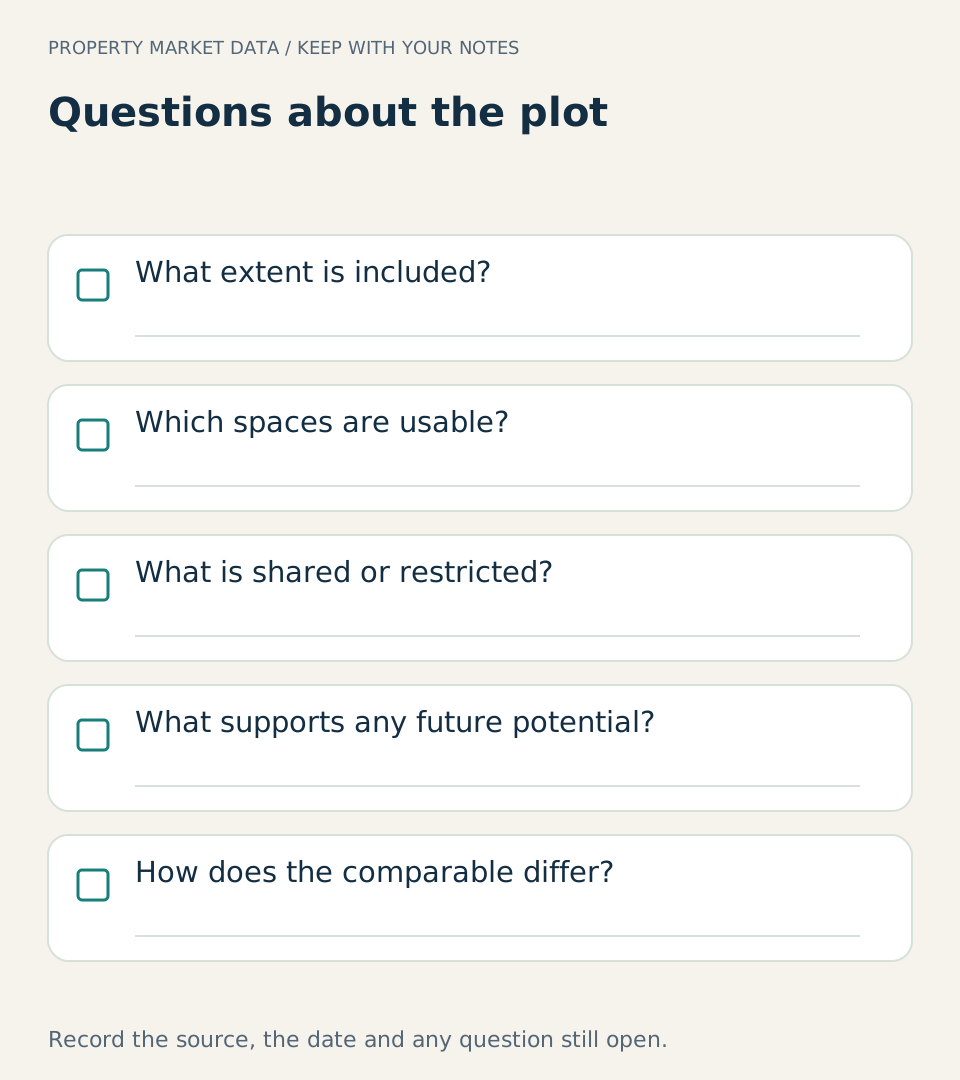
What extent is included?; Which spaces are usable?; What is shared or restricted?; What supports any future potential?; How does the comparable differ? Record the supporting document and any unanswered question.
Questions for a seller or a viewing
Ask what practical features the buyer should understand and what records support the description. State maintenance or access information factually. Avoid claiming the garden will suit every household or add a standard sum.
For a purchase, look at the space in the context of your daily use. Your personal preference can influence your offer, but it should not be mistaken for a documented market premium that applies to everyone.
If a price adjustment is proposed, ask how the comparable evidence supports it. A clear explanation is more useful than a rate applied mechanically to a claimed area.
PMD and the outdoor-space question
PMD can organise available comparable sales and local context. It cannot determine exact title boundaries, certify development rights or assign a universal price to each part of a garden. Check the data limits before ordering.
Use the evidence to organise your questions about this plot. Where a boundary or permission matters, take that question to the relevant adviser. The assessment becomes more useful when it describes what a buyer is actually acquiring.
Sources
- Government guidance, Your property boundaries: Title plans usually indicate general rather than exact boundaries
- Government guidance, Use of planning conditions: Checking actual permission conditions; England planning guidance