
Specialist property valuations
How should you assess a house with land and outbuildings?
A house with land is a combination of accommodation, usable space and rights. The acreage alone does not tell you what a buyer can do with it. Before assessing the price, establish what is included, how it is reached and which comparisons are genuinely relevant.
This is an estimate from comparable sales, not a RICS or mortgage valuation, and not a survey.
Establish the property you are assessing
Ask for a plan showing the land and buildings included in the proposed sale. Check whether the marketing description and the available title information describe the same extent. A photograph of a field is not confirmation that it forms part of the purchase.
Government boundary guidance explains that most title plans indicate general boundaries rather than exact lines. If a boundary is material or disputed, ask the conveyancer or appropriate specialist how it should be checked. Do not treat a line on a small plan as precise surveyed acreage.
Make a separate list of access arrangements. Can the house, buildings and land be reached directly? Does use depend on somebody else's land or a shared route? Those questions need facts and advice, not assumptions from a viewing.
Area is only the beginning
Our recommended description records what the land is like, how it is currently used and what a buyer proposes to use it for. Shape, drainage, position, condition and access may affect practical utility. The same area can represent very different experiences.
Keep domestic garden, paddock and other land uses separate in your notes. Garden and plot size in a house valuation focuses on outdoor space supporting the home. This article addresses the wider property and its accompanying land.
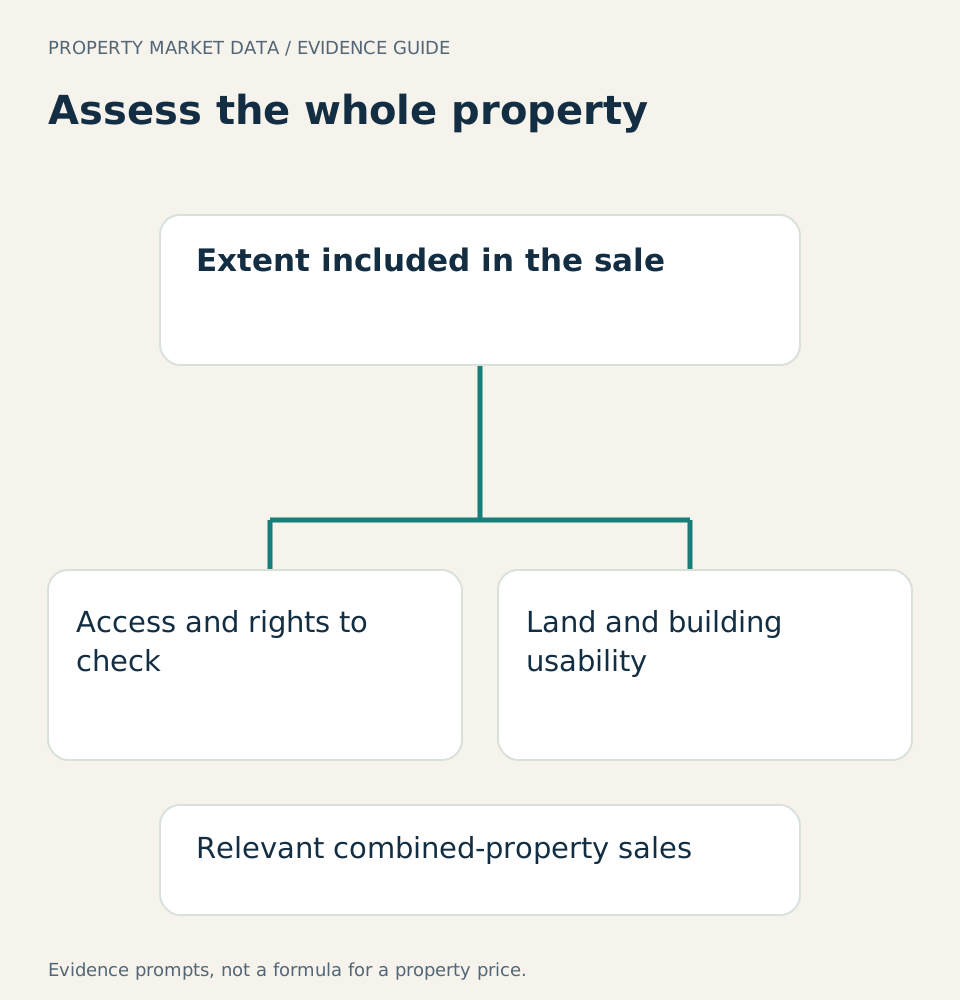
Extent included in the sale; Access and rights to check; Land and building usability; Relevant combined-property sales. Read the evidence together before making a property-specific judgement.
Do not assume that a large plot has development potential. If that possibility is part of the price justification, ask what evidence supports it and obtain suitable planning advice. Potential should not be priced as an established permission merely because somebody suggests it.
Describe the buildings without valuing them twice
List the actual outbuildings, their condition and practical use. A structure that looks substantial may require work or be unsuitable for the intended activity. Ask what is included and whether documents describe its use.
Avoid adding several speculative component values to a price already supported by whole-property sales. That can count the same attraction more than once. Ask the person making the assessment how they have handled the combined property.
Choose a comparison that answers your question
The relevant sale may involve a similar house and land arrangement rather than a nearby house on a small plot. Equally, a bare-land transaction may not explain the appeal of land attached to a home.
Assessing unusual homes explains the wider evidence problem. Request a clear explanation of which similarities matter, which differences remain and why the evidence supports the proposed range.
If stables or an arena are important, read the equestrian-property assessment guide. Facilities supporting horse use need a practical review beyond the presence of acreage.
Make the land description usable
| Check | What to establish |
|---|---|
| Extent | Separate title information from the area shown in marketing. |
| Access | Identify entrances, rights and practical vehicle access. |
| Use | Describe garden, grazing and other land separately. |
| Buildings | Record condition and function rather than adding every floor area together. |
Walk the evidence back to the whole property. Land which is difficult to reach or maintain may serve a different buyer need from land immediately adjoining the house. A larger acreage does not automatically provide a stronger comparison. Explain what each area contributes, then look for evidence from properties with similar practical use.
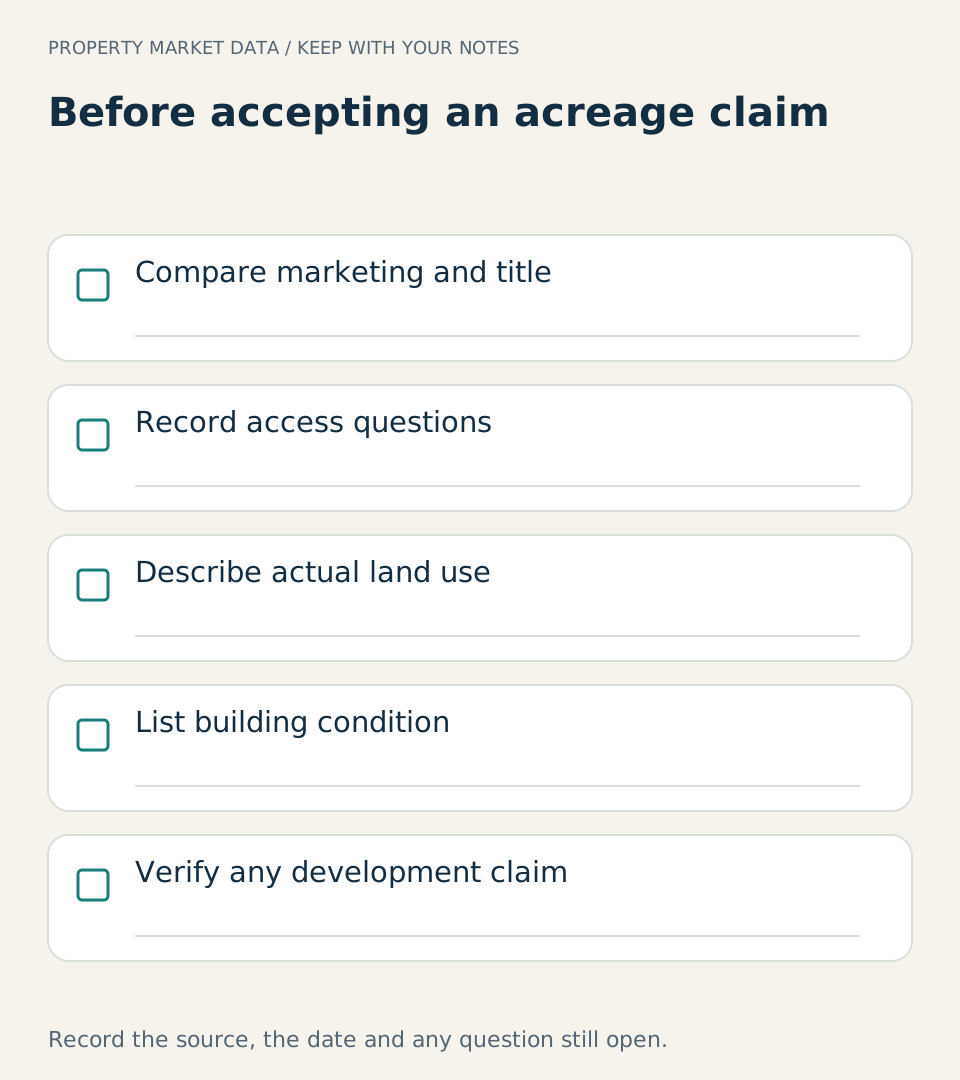
Compare marketing and title; Record access questions; Describe actual land use; List building condition; Verify any development claim. Record the supporting document and any unanswered question.
Keep the next conversation grounded
Take a factual plan, building list and access questions into the discussion with the agent or valuer. Ask for the basis of any claimed premium. Do not insist on a single rate per acre without considering what is being compared.
Keep ownership and permitted-use matters with the conveyancer and relevant professionals. An assessment of buyer appeal should not be mistaken for confirmation that your proposed activity is allowed.
Use PMD within its scope
PMD can help organise the available property and local-market evidence for a sale decision. Land-heavy or unusual arrangements may need professional assessment beyond an automated report. Confirm eligibility and read the methodology limits.
A useful estimate should explain the whole property and the uncertainties. It should not turn a large acreage number into an automatic price uplift.
Sources
- Government guidance, Your property boundaries: Title plans usually indicate general rather than exact boundaries
- Government guidance, Use of planning conditions: Checking actual permission conditions; England planning guidance