
Specialist property valuations
Does an EPC rating affect your home’s value?
An EPC rating describes energy performance, but it does not tell you exactly how much a particular buyer will pay. Use the certificate to ask better questions about the home, then assess the market evidence separately. A research association is not a valuation formula.
This is an estimate from comparable sales, not a RICS or mortgage valuation, and not a survey.
Start with the certificate for this home
Find the actual certificate and its date through the government's energy-certificate service. Check that it describes the correct dwelling. If the property has changed, establish whether the record still represents the relevant features.
Read the certificate information alongside evidence of work, rather than assuming an advertised rating describes everything a buyer will experience. Ask the provider or appropriate professional to clarify anything you do not understand.
Research discussed by the professional surveying body examines energy-performance characteristics and residential transactions. That can help explain why the topic merits attention, but a market study does not establish the exact contribution of a rating to your home's value.
Keep association and cause apart
A more efficient property may also differ in age, condition, location or other characteristics. An observed difference between groups of homes cannot automatically be assigned entirely to energy performance.
Our practical recommendation is to identify the question you want the evidence to answer. Are you comparing two houses, considering work or deciding how to present a home? Each task needs more than a headline percentage from a study.
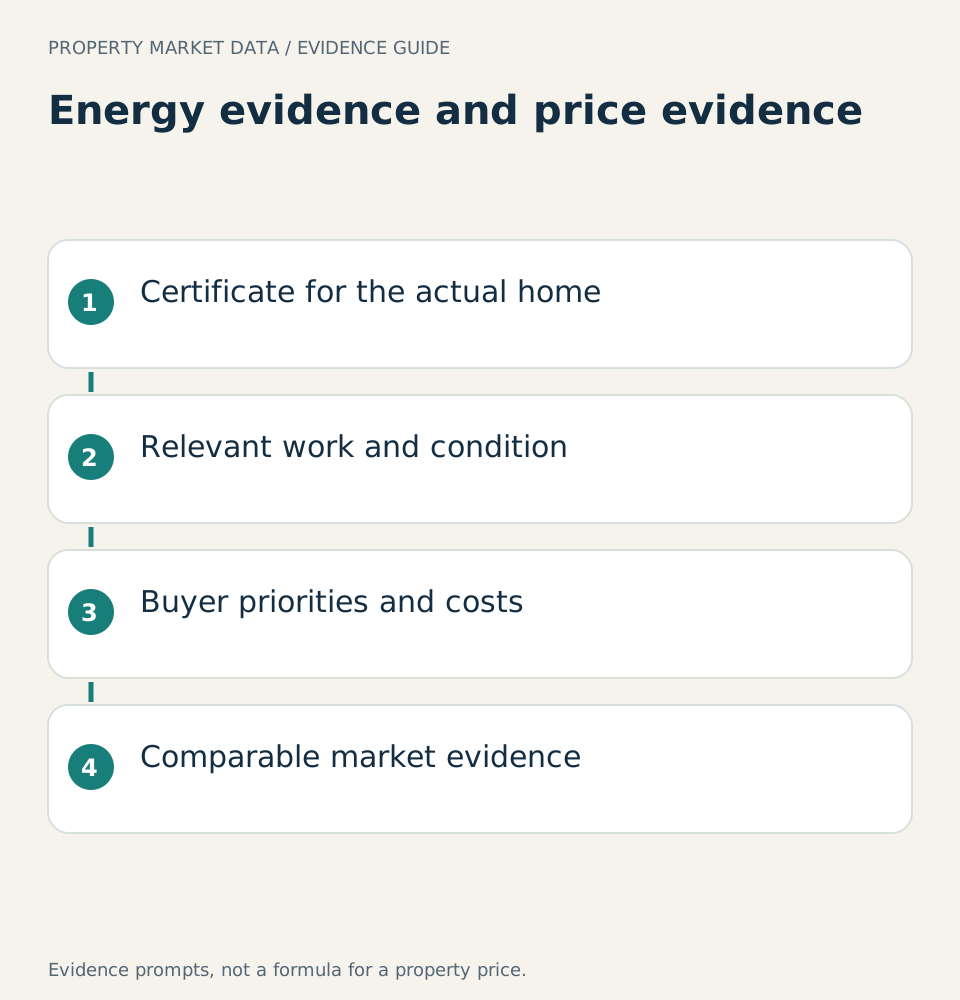
Certificate for the actual home; Relevant work and condition; Buyer priorities and costs; Comparable market evidence. Read the evidence together before making a property-specific judgement.
A provider proposing a value adjustment should explain its basis. Ask which evidence relates to this property and which assumptions remain. Avoid turning a potential certificate rating into an achieved sale premium.
Running costs and buyer priorities
Ask what information is available about the home's systems and performance. Household use affects real experience, so a seller's bill is not a promise about your own costs. Keep assumptions explicit when comparing homes.
For some buyers, the practical priority may be comfort, disruption or affordability of work. Ask those questions directly rather than assuming all buyers value an improvement in the same way.
Work costs are not a valuation uplift
If you are considering improvements before selling, renovating before selling or selling as it is helps separate project decisions from marketing assumptions. Establish the work scope and appropriate advice before estimating costs.
Then compare the costs and uncertainty with the actual decision. Money spent on a change does not establish that the sale value increases by the same amount. Timing and the buyer audience also deserve attention.
Read the energy evidence carefully
| Check | What to establish |
|---|---|
| Certificate date | Check whether the rating reflects the home as it now stands. |
| Recommendations | Distinguish suggested improvements from work already completed. |
| Practical costs | Seek actual information about proposed work and disruption. |
| Comparable evidence | Look for relevant homes with more than an energy rating in common. |
Research about energy performance describes patterns across groups of buildings. It cannot tell you the price effect of one upgrade in one home. Consider condition, layout and local demand alongside energy information. If you plan work mainly before selling, obtain appropriate cost advice and assess the wider decision rather than assuming the expenditure will return in the sale price.
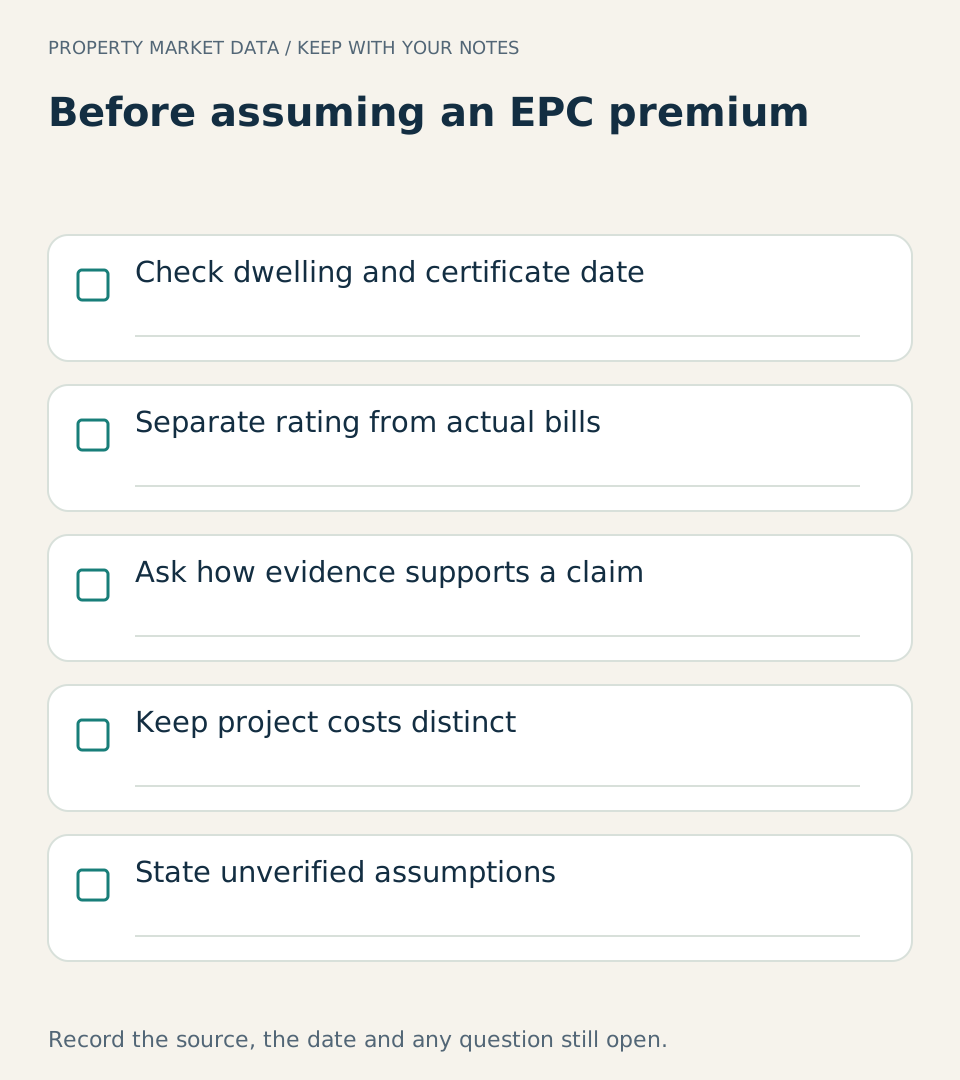
Check dwelling and certificate date; Separate rating from actual bills; Ask how evidence supports a claim; Keep project costs distinct; State unverified assumptions. Record the supporting document and any unanswered question.
Choosing comparable sales provides the evidence framework. Match the important characteristics and explain the differences rather than comparing only the energy label.
Check other certificate inputs separately
If your question concerns size, read which floor area to use in a property assessment. Energy rating and recorded area are different pieces of information, even when found in the same document.
A correction to one detail does not establish the effect on every other result. Ask the provider what was used, what changed and what conclusion follows.
Use PMD without assuming an energy adjustment
PMD can organise comparable sales and local-market evidence. Do not assume the system calculates a particular rating premium or incorporates every improvement. Read the data explanation to establish the actual scope.
Use the report to organise your market questions alongside the energy information and professional advice. A useful property decision explains the evidence, costs and remaining uncertainty rather than leaning on a single label.
Sources
- Royal Institution of Chartered Surveyors, Residential energy performance and valuation: Research context for energy performance and property values, not a property-specific uplift
- Government guidance, Find an energy certificate: Finding existing energy certificates rather than assuming current measurement