
Selling your home
How do you compare home values when planning to downsize?
A smaller home does not automatically release the amount you expect. Compare realistic sale proceeds with the actual purchase and moving costs, then check whether the next property suits your needs. The size difference and the financial difference are not the same calculation.
This is an estimate from comparable sales, not a RICS or mortgage valuation, and not a survey.
Put both sides of the move on paper
Start with the home you intend to sell and the home you might buy. Write separate evidence-based ranges rather than use an optimistic sale figure and a convenient purchase estimate.
Then list the relevant costs and funding commitments. MoneyHelper identifies different buying and moving cost categories. Your actual quotes, advice and circumstances should determine the figures, not a generic budget copied from another household.
This article is a comparison method, not a recommendation about borrowing, tax or investment. Obtain appropriate advice where those decisions affect the move.
Work with proceeds rather than headline value
Ask what needs to be paid or accounted for before the sale money is available. A valuation figure is not the same as the amount you can put towards another home. Record unknown items as unknown until the appropriate adviser supplies them.
Keep sale assumptions realistic. Assessing an offer below asking price explains why the asking figure and the decision on a real offer are different tasks. Do not build the whole plan around receiving the amount you hoped to advertise.
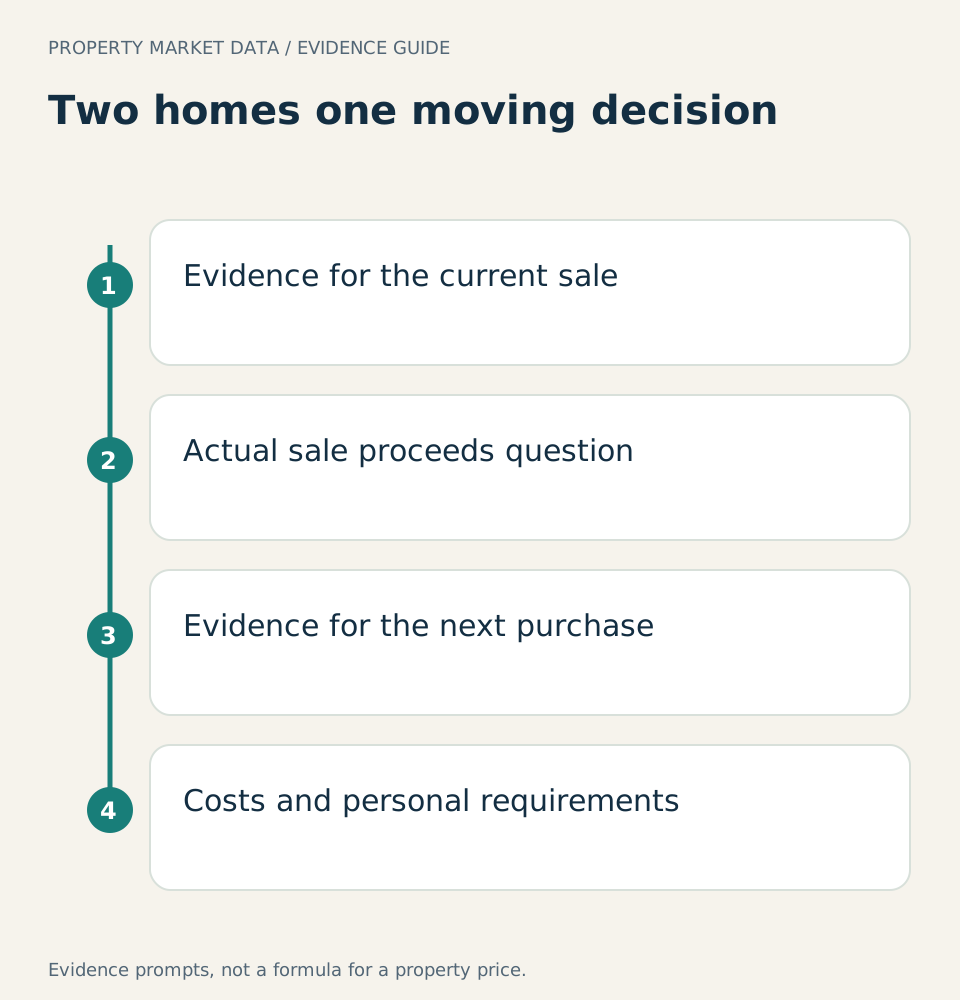
Evidence for the current sale; Actual sale proceeds question; Evidence for the next purchase; Costs and personal requirements. Read the evidence together before making a property-specific judgement.
Compare the next home on its own evidence
A property's smaller size does not establish a smaller price in a different location or buyer market. Comparing homes before buying helps separate the purchase evidence from your personal preference.
Ask how the target home's condition, location and accommodation affect the comparison. If suitable options cost more than expected, that is useful information for the plan, not something to conceal with an optimistic sale estimate.
Consider the everyday arrangement
Write down what the new home needs to do for you. Layout, outdoor upkeep, access and practical costs can matter as much as the number of rooms. Avoid treating downsizing as a standard move for a standard household.
If you are considering a bungalow, how a bungalow should be compared explains property-specific evidence. The label alone does not establish ease of use or suitability.
Stress-test the move with real categories
| Check | What to establish |
|---|---|
| Current home | Use an evidence-based expectation rather than the preferred asking price. |
| Next home | Research the type and location you actually want. |
| Moving costs | List professional fees and other relevant transaction costs separately. |
| Contingency | Consider how a changed price or delayed move affects your plan. |
Downsizing is not simply subtracting the next asking price from the current one. The homes may have different market conditions and your costs arrive at different stages. Make a budget you can explain, with assumptions visible. If affordability is close, obtain appropriate financial advice before treating an estimated difference as money already available.
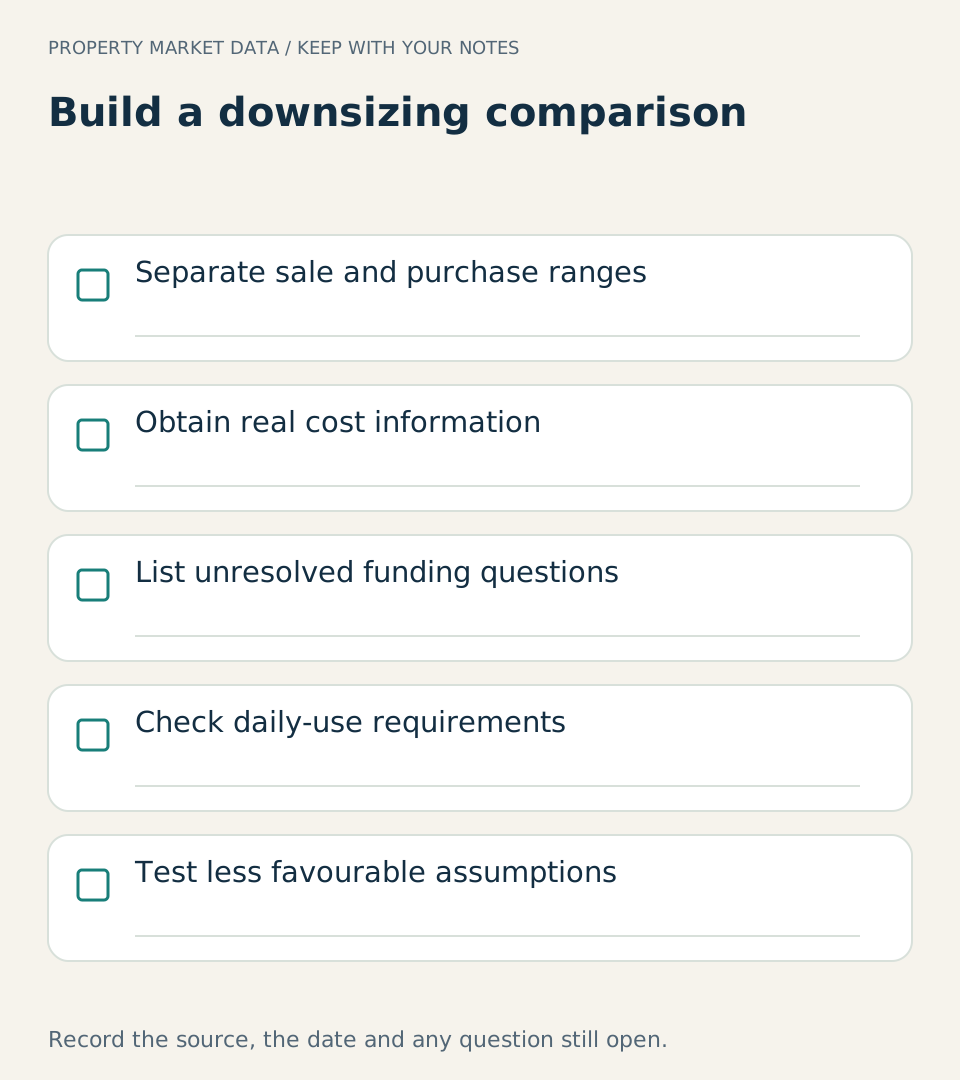
Separate sale and purchase ranges; Obtain real cost information; List unresolved funding questions; Check daily-use requirements; Test less favourable assumptions. Record the supporting document and any unanswered question.
Test the plan against uncertainty
Use the checklist to build three budget scenarios in your own notes: cautious, central and more favourable. You supply the evidence for each assumption. No scenario should be described as a forecast or a promised result.
Where a cost is uncertain, seek a quote or advice. Where a property value is uncertain, review the relevant evidence. A spreadsheet becomes useful by showing the gaps, not by filling them with precise invented numbers.
Ask what happens if the sale proceeds are lower, the suitable purchase is dearer or the sequence takes longer. Those questions help you assess resilience without choosing a financial product.
Where PMD supports the comparison
A PMD seller report can organise comparable and local-market evidence for your present home. A buyer report can help research an eligible target property. The reports do not determine available funds, tax or future expenses.
Read the data explanation before using the estimates. Keep the two markets and their limitations separate.
When you have a real target in mind, consider the buyer report for that separate assessment. The useful plan connects realistic property evidence with actual moving information and personal needs, rather than assuming that fewer rooms always creates a financial benefit.
Sources
- MoneyHelper, Mortgage fees and moving costs: Lender valuation purpose and separate moving-cost categories
- Government guidance, How to sell a home: Estate agent appraisals, selling preparation and checking service scope
- Government guidance, How to buy a home: Purchase evidence, funding, conveyancing and transaction stages