
Specialist property valuations
Why should a bungalow be compared differently from a house?
A bungalow and a house can share a bedroom count while offering different accommodation. Assess the usable layout, plot and relevant buyer evidence before treating them as equivalent. The property type is a starting point for comparison, not a standard premium.
This is an estimate from comparable sales, not a RICS or mortgage valuation, and not a survey.
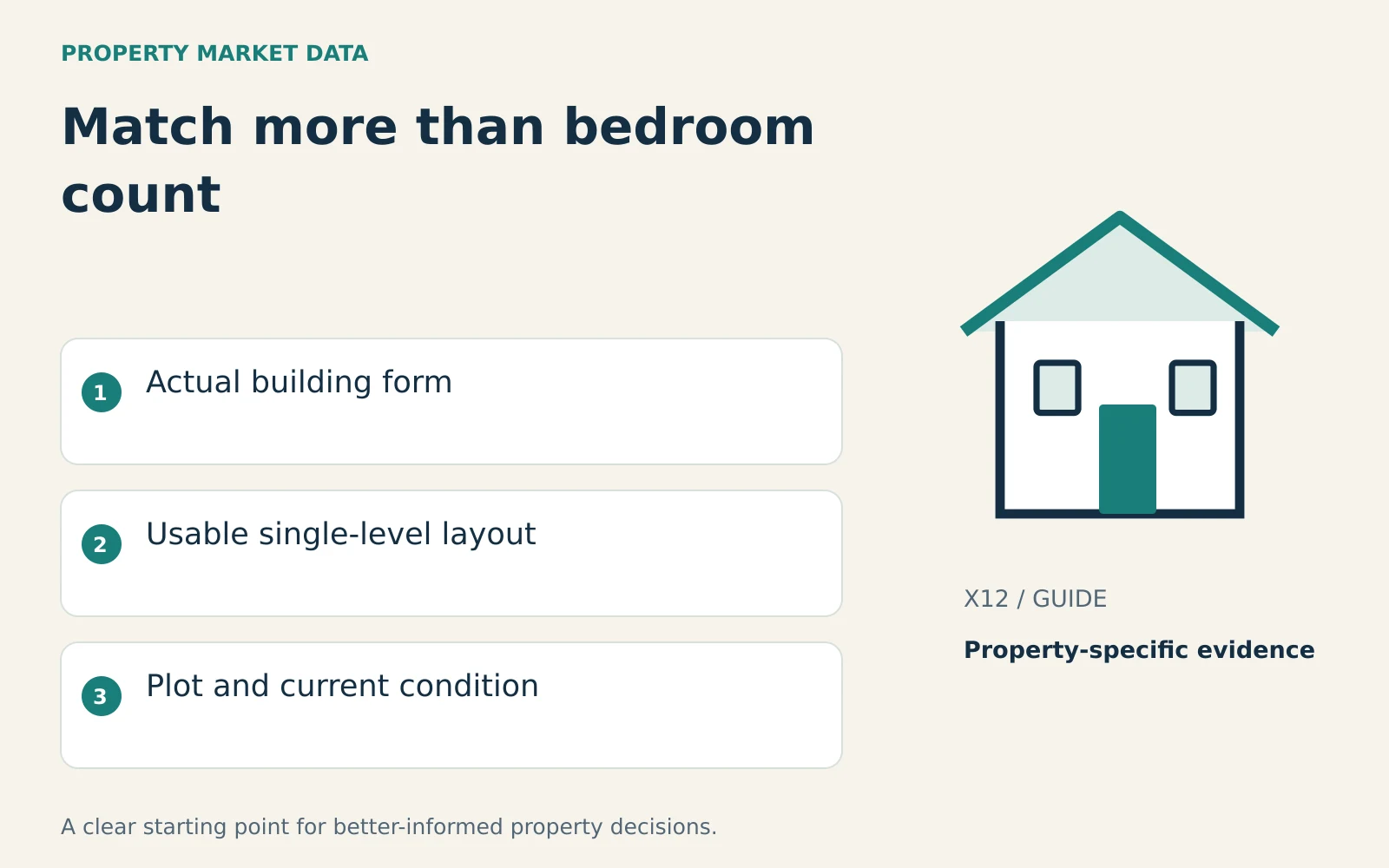
Follow how the accommodation works
Look at the routes between rooms, outdoor access, storage and the relationship between living and sleeping areas. A single-level layout can serve particular needs, but not every bungalow meets the same needs equally well.
Avoid assumptions about the buyer's age or circumstances. Ask what practical requirements the home supports. A preference for one arrangement should be described factually rather than turned into a claim about an entire group of buyers.
HM Land Registry's Price Paid Data uses broad property categories and does not separately identify bungalows within those categories. That makes property-level checking important when interpreting transaction evidence.
A category match may still miss the building
A sale recorded as detached does not establish whether the accommodation is a bungalow or a house. Ask what additional evidence identifies the form, layout and relevant features of the comparable property.
Choosing comparable sales explains why matching the actual home matters. A nearby sale with a similar bedroom count may provide context without settling the value of a different accommodation arrangement.
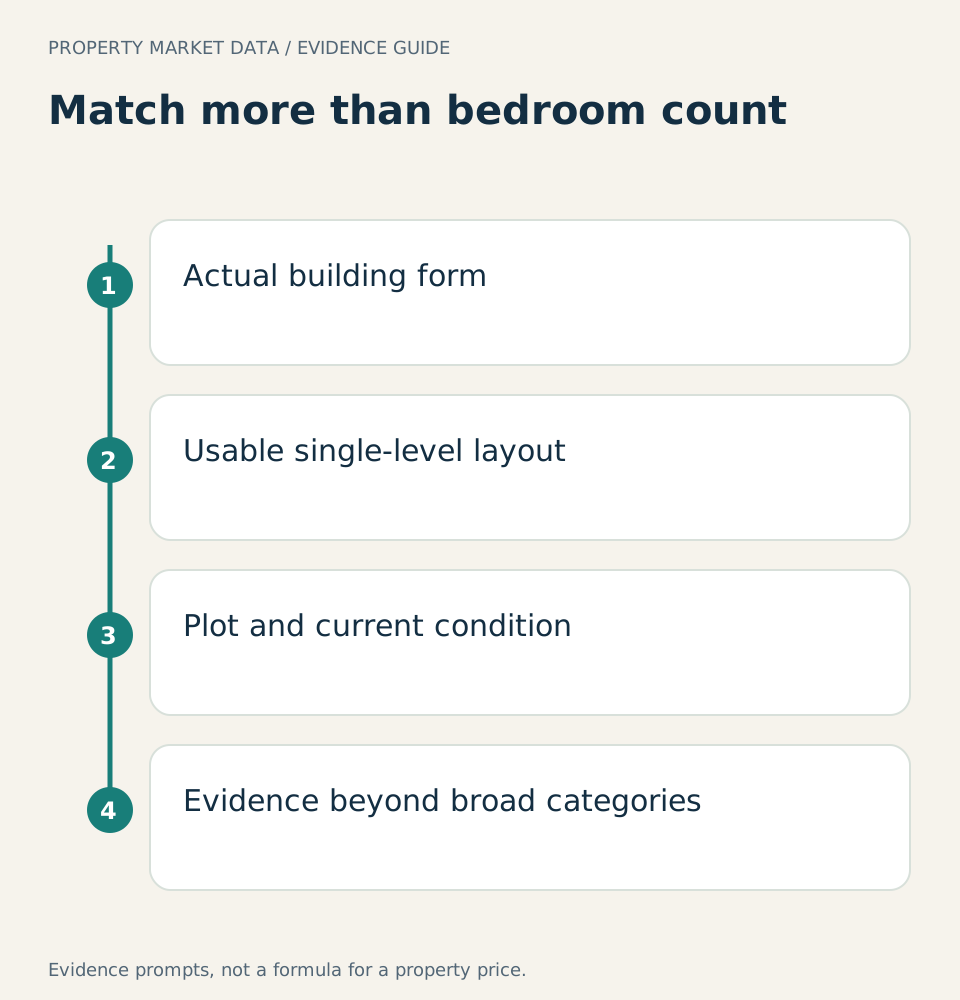
Actual building form; Usable single-level layout; Plot and current condition; Evidence beyond broad categories. Read the evidence together before making a property-specific judgement.
Compare the plot and future assumptions carefully
Bungalows may come with different plots, but area alone is not a price rule. Look at the actual garden, access and buildings included. Keep any potential alteration or development separate from the home as it exists.
A buyer who plans changes needs suitable advice and evidence. Do not treat an owner's ambition for another floor or extra accommodation as an established feature of the sale.
Place local statistics in context
Understanding local house values helps explain why an area average may reflect a mixture of property types. A general median can be useful context while remaining a poor description of a particular bungalow.
Ask how the selected evidence handles different layout, condition and setting. If close matches are limited, the uncertainty should be described rather than hidden by a precise category uplift.
Compare single-level accommodation thoughtfully
| Check | What to establish |
|---|---|
| Circulation | Consider how the rooms connect and the space used by corridors. |
| Access | Record steps, thresholds and the actual route into the home. |
| Adaptation | Separate existing features from work a buyer would need. |
| Plot relationship | Describe outdoor space, access and upkeep alongside the building. |
Do not assume that every bungalow is accessible to every buyer. Single-level rooms are only part of the picture. A comparison with a house can help explain local alternatives, but should recognise the different accommodation and practical use. Look for evidence that reflects the actual home rather than imposing a fixed bungalow premium.
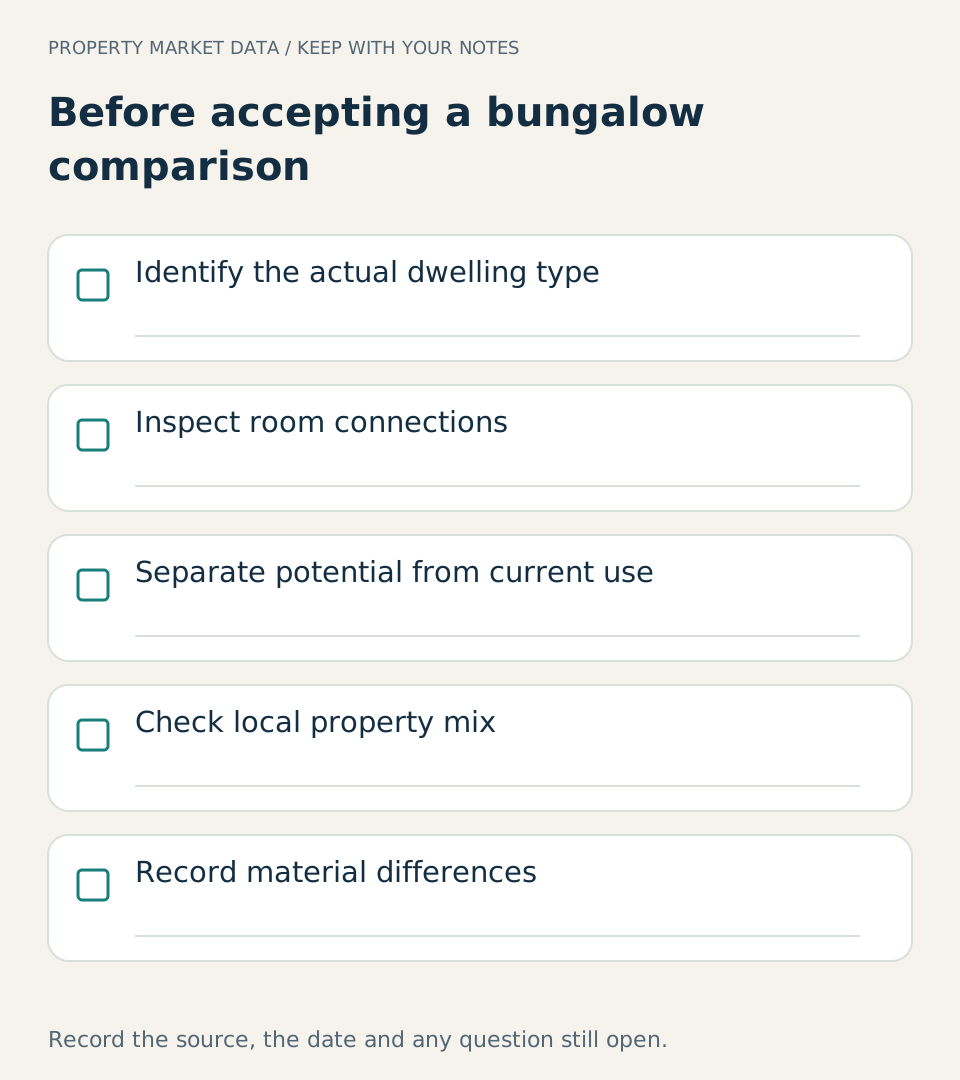
Identify the actual dwelling type; Inspect room connections; Separate potential from current use; Check local property mix; Record material differences. Record the supporting document and any unanswered question.
If you are considering a bungalow to downsize
Comparing values when planning to downsize addresses the separate moving-budget decision. The target property's suitability and the money released by your sale are related but different questions.
Think through your actual routine. An apparent reduction in size can still leave questions about running costs, maintenance or access. Compare those facts rather than assuming that a smaller dwelling always creates an easier arrangement.
For a seller, explain the usable accommodation clearly. Evidence about room connections and access can help a buyer understand the property without making universal claims about its audience.
Prepare a focused comparison note
Our suggested note records the building form, current layout, known plot features and the differences in each proposed comparable. Mark any unknown description as unknown. Ask the agent or valuer which differences materially affect their assessment.
Where inspection or specialist advice is necessary, arrange it for the actual home. A data category cannot certify suitability or condition.
PMD's role
PMD can organise available sale and local-market evidence. Its sources and property matching need to be understood for a bungalow assessment. Read the data explanation and confirm the relevant coverage.
Use the report to ask clearer comparison questions. The aim is to understand this bungalow's evidence, rather than accept a number because several unrelated detached homes sold nearby.
Sources
- HM Land Registry, Price Paid Data: Recorded transaction evidence and broad property-type categories
- Royal Institution of Chartered Surveyors, Automated valuation models roadmap: Model scope, explainability and evidence limitations